 2025
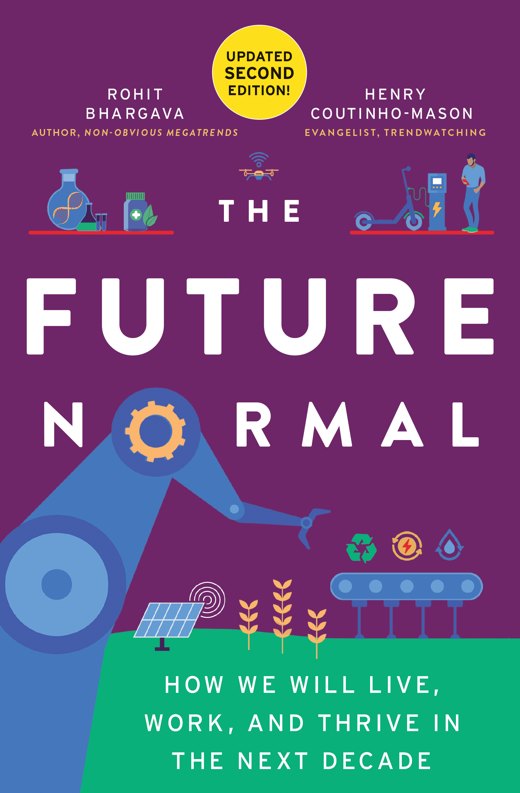
2025 The Future Normal
 Multiversal IdentityFuture Normal
As we build avatars and digital versions of ourselves across virtual worlds, the identities we create online start shaping who we become offline.
Read More About This Trend →
 Immersive EntertainmentFuture Normal
Entertainment is shifting from something audiences watch to something they step inside.
Read More About This Trend →
 Certified MediaFuture Normal
As manipulated content gets cheaper and more convincing, proving what is real becomes urgent for everyone.
Read More About This Trend →
 Stealth LearningFuture Normal
Education is escaping the classroom and hiding inside the games, videos and platforms usually dismissed as time wasted.
Read More About This Trend →
 Ending LonelinessFuture Normal
Loneliness is being treated less as private misfortune and more as a design problem that housing, policy and media can help solve.
Read More About This Trend →
 Virtual CompanionshipFuture Normal
Chatbots, robots and virtual influencers are moving from novelty to a genuine source of emotional support, particularly where human care is scarce or stigmatized.
Read More About This Trend →
 Psychedelic WellnessFuture Normal
Psilocybin, ketamine and MDMA are moving out of counterculture and into clinical trials for depression, PTSD and obsessive compulsive disorder.
Read More About This Trend →
 Ambient HealthFuture Normal
The buildings we live and work in are being redesigned to actively improve health rather than simply provide shelter.
Read More About This Trend →
 Green PrescriptionsFuture Normal
We spend more money than ever on health and wellness, and almost all of it indoors.
Read More About This Trend →
 Metabolic MonitoringFuture Normal
Most wearables measure heart rate, a superficial and lagging signal, and most people cannot act on the data anyway.
Read More About This Trend →
 Augmented CreativityFuture Normal
Generative AI is collapsing the time, effort and skill required to produce writing, images, music and film, cutting work that took weeks down to hours.
Read More About This Trend →
 Remote Work For AllFuture Normal
The work-from-home shift was decidedly white collar, leaving out anyone whose job could not be done over a laptop and a Wi-Fi connection.
Read More About This Trend →
 Work DeconstructedFuture Normal
Flexibility is moving past the question of where people work to how a job is divided in the first place, including two people sharing a single role.
Read More About This Trend →
 Reflective CulturesFuture Normal
Diversity efforts that stop at product tweaks and ad campaigns are running out of credibility while the cost of exclusion keeps mounting.
Read More About This Trend →
 Big Brand RedemptionFuture Normal
When most of us picture a company with positive impact we picture something like Patagonia: founder-owned, mission driven and relatively small.
Read More About This Trend →
 Impact HubsFuture Normal
Predictions of the end of the office were premature, but the office is being renegotiated: work is going hybrid, footprints are shrinking, and real estate is still the biggest line…
Read More About This Trend →
 Calculated ConsumptionFuture Normal
We count steps, compare calories, measure resting heart rates and track sleep, because data makes us feel in control.
Read More About This Trend →
 Guilt-Free IndulgenceFuture Normal
People say they want to buy responsibly and then routinely take the easier, cheaper or more convenient option, because our desire is there but our actions are inconsistent.
Read More About This Trend →
 Secondhand StatusFuture Normal
Buying used has shed its stigma and become a signal of taste, thrift and environmental awareness, and resale platforms let sellers show off their own entrepreneurialism on top of it.
Read More About This Trend →
 New CollectivismFuture Normal
Cooperatives, mutual societies and credit unions are centuries old and enormous, yet they remain rare among the fastest-growing digital startups even though those business models are…
Read More About This Trend →
 Good GoverningFuture Normal
Faith in government keeps eroding, and Edelman’s Trust Barometer of 36,000 people across 28 countries ranks it the least effective institution for solving social problems, behind…
Read More About This Trend →
 The 15-Minute CityFuture Normal
Cities are being redesigned so that everything people need sits within a short walk, cycle or ride of home, and electric micromobility keeps stretching how far 15 minutes reaches.
Read More About This Trend →
 Inhuman DeliveryFuture Normal
Drone delivery has moved from far-fetched to routine, with Alphabet-owned Wing passing 350,000 deliveries across three continents and Zipline completing over 400,000 missions carrying…
Read More About This Trend →
 Urban ForestsFuture Normal
Trees and plants are being treated as infrastructure rather than decoration, because they cool streets, capture carbon, cut noise and increase biodiversity.
Read More About This Trend →
 Nu-AgricultureFuture Normal
Food production is being decoupled from farmland through fermentation, vertical farming and insect protein, all of which need far less land, water, energy and labor.
Read More About This Trend →
 Waste-Free ProductsFuture Normal
Products and their packaging are being redesigned so that disposal is not somebody else’s problem later, using compostable materials, seaweed-based packaging and marketplaces…
Read More About This Trend →
 Millions of MicrogridsFuture Normal
Aging centralized grids are failing more often just as extreme weather makes outages more damaging, while the cost of solar has fallen more than 80 percent in a decade and battery…
Read More About This Trend →
 Making WeatherFuture Normal
Deliberately modifying weather is one of the most contested ideas in climate science, and the danger lies in what changing one region’s ecosystem does to another.
Read More About This Trend →
 Beyond Net ZeroFuture Normal
Carbon neutral is becoming the floor rather than the ambition, with a growing cadre of businesses aiming to leave the environment better than they found it.
Read More About This Trend →
 2020
2020 Non-Obvious Megatrends
Amplified IdentityMegatrend
As individualism rises globally, people are carefully cultivating how they are perceived both online and offline, chasing stardom, and making themselves vulnerable to criticism in the process.
Read More About This Trend →
UngenderingMegatrend
Traditional gender divisions and labels are getting replaced with a more fluid understanding of gender identity, forcing a reevaluation of how we see employees, customers, brands and one another.
Read More About This Trend →
Instant KnowledgeMegatrend
As we become accustomed to consuming bitesized knowledge on demand, we benefit from learning everything more quickly but risk forgetting the value of mastery and wisdom.
Read More About This Trend →
RevivalismMegatrend
Overwhelmed by technology and a sense that life is now too complex and shallow, people seek out simpler experiences that offer a sense of nostalgia and remind them of a more trustworthy time.
Read More About This Trend →
Human ModeMegatrend
Tired of technology that isolates us from one another, people seek out and place greater value on physical, authentic and “unperfect” experiences designed with empathy and delivered by humans.
Read More About This Trend →
Attention WealthMegatrend
In the information economy, our attention is our most valuable resource, leading us to be more skeptical of those who manipulate us to get it, and instead seek out and trust those who communicate in more authentic ways.
Read More About This Trend →
Purposeful ProfitMegatrend
As consumers and employees demand more sustainable and ethical practices from businesses, companies respond by adapting products, taking stands on issues, and putting purpose first.
Read More About This Trend →
Data AbundanceMegatrend
The growing ubiquity of data and the myriad ways it can be collected raise big questions about how to make it truly useful, who owns the data, and who should stand to profit from it.
Read More About This Trend →
Protective TechMegatrend
As we increasingly rely on predictive technology that keeps us and our world safe and makes life more convenient, we must contend with the privacy trade-offs required to make it work.
Read More About This Trend →
Flux CommerceMegatrend
As the lines between industries erode, how we sell and buy anything changes constantly, leading to a continual disruption of business models, distribution channels, consumer expectations and even innovation itself.
Read More About This Trend →
 2019
2019 Non-Obvious Trend Report
 Artificial Influence2019
Creators, corporations, and governments use virtual creations to shift public perception, sell products, and even make fantasy into reality.
Read More About This Trend →
 B2Beyond Marketing2019
B2B brands use non-traditional methods to embrace their humanity and reach decision-makers along with a broader audience.
Read More About This Trend →
★
Deliberate Downgrading2019
As tech-enabled products become overbearing, consumers opt to “downgrade” to simpler, cheaper, or more functional versions instead.
Read More About This Trend →
 Enterprise Empathy2019
Empathy becomes a driver of innovation and revenue, and a point of differentiation for products, services, hiring, and experiences.
Read More About This Trend →
 Extreme Uncluttering2019
To simplify daily life, people shed their excess “stuff,” and seek pared-down experiences and ways to unclutter their digital identities too.
Read More About This Trend →
 Fad Fatigue2019
Consumers get weary of innovations claiming to be the “next big thing,” and assume none will last long.
Read More About This Trend →
 Good Speed2019
The urgency of the problems facing humanity is inspiring corporations, entrepreneurs, and individuals to find ways of doing good (and generating results) faster.
Read More About This Trend →
 Innovation Envy2019
Fear leads entrepreneurs, businesses, and institutions to envy competitors and approach innovation with admiration or desperation.
Read More About This Trend →
 Muddled Masculinity2019
The rising empowerment of women and reevaluation of gender itself are causing widespread confusion and angst about what it means to be a man today.
Read More About This Trend →
 Overwealthy2019
Growing income inequality leads to more guilt among the affluent, leading them to seek more ways to give back.
Read More About This Trend →
★
Passive Loyalty2019
As switching from brands becomes easier, companies reevaluate who is loyal, who isn’t, and how to inspire true loyalty
Read More About This Trend →
 Retrotrust2019
Often unsure of whom to trust, consumers look back to organizations and experiences with brands that have a legacy, or those with which they have a personal history.
Read More About This Trend →
 Robot Renaissance2019
As robots adopt more human-like interfaces and micro-personalities, they are raising new questions and issues about how we relate to technology.
Read More About This Trend →
 Side Quirks2019
A global shift toward individualism drives people to follow their passion, start a side business, and appreciate quirks in one another.
Read More About This Trend →
 Strategic Spectacle2019
Brands and creators intentionally use spectacles to capture attention and drive engagement
Read More About This Trend →
 2018
2018 Non-Obvious Trend Report
 Approachable Luxury2018
Luxury is no longer defined by scarcity and privilege, but rather through more down-to-earth authentic human experiences.
Read More About This Trend →
 Backstorytelling2018
Organizations are using the power of stories to share relatable heritages, missions, personalities and reasons for existing.
Read More About This Trend →
 Brand Stand2018
Reacting to a polarized media atmosphere, more brands feel compelled to take a stand and highlight their core values.
Read More About This Trend →
 Data Pollution2018
Organizations invest in tools that help them draw actionable, practical insight out of data that can mislead as easily as it informs.
Read More About This Trend →
 Disruptive Distribution2018
Creators and makers find ways to cut out middlemen and build more direct connections with fans and buyers.
Read More About This Trend →
 Enlightened Consumption2018
Empowered with more information, people demonstrate their values through how they buy, work, consume, and invest.
Read More About This Trend →
 Human Mode2018
As automation increases, people put a premium on advice, services, and interaction involving actual humans.
Read More About This Trend →
 Light-Speed Learning2018
The road to mastery of any topic comes through bite-sized learning modules that make education faster and easier.
Read More About This Trend →
 Manipulated Outrage2018
Media and advertising combine to incite rage or, at the very least, a strong reaction in the media.
Read More About This Trend →
 Overtargeting2018
Organizations segment audiences too narrowly and unintentionally abandon potentially lucrative customers.
Read More About This Trend →
 Predictive Protection2018
Intuitive products, services and features help protect us by improving our health, keeping us safe and protecting our finances.
Read More About This Trend →
 Touchworthy2018
Overwhelmed by digital, consumers turn back to products and experiences that they can touch, feel and sense.
Read More About This Trend →
 Truthing2018
As a consequence of eroding trust in media, people are engaging in a personal quest for the truth based on direct interaction.
Read More About This Trend →
 Ungendered2018
Shifting definitions of gender lead some to reject the notion of gender while others mask gender from products and experiences.
Read More About This Trend →
 Virtual Empathy2018
Immersive experiences increase empathy by helping people see the world through foreign and unfamiliar eyes.
Read More About This Trend →
 2017
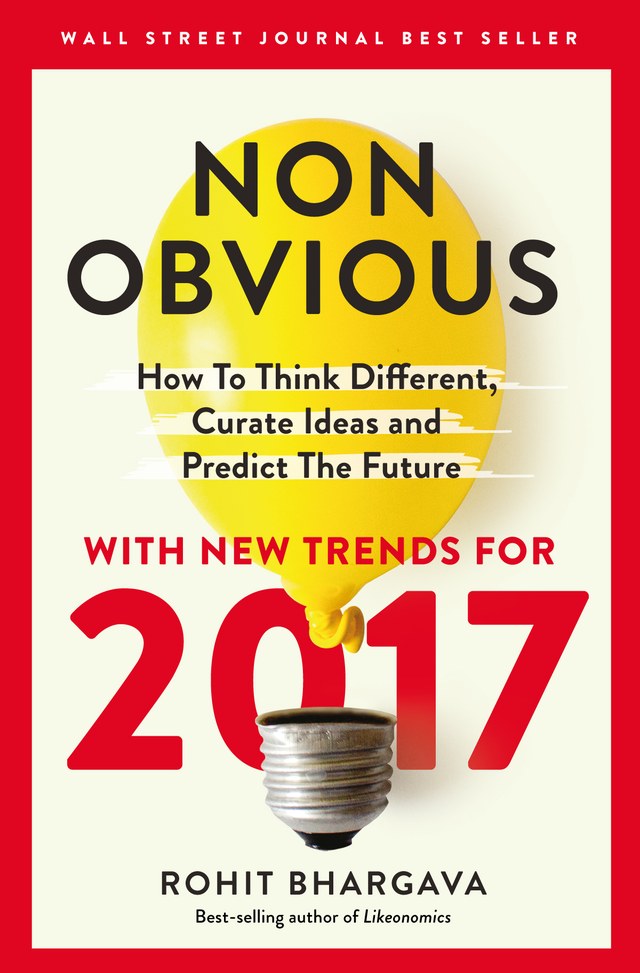
2017 Non-Obvious Trend Report
 Authentic Fameseekers2017
A new generation of creators use social media to grow personal brands, attract fans and become famous for being themselves.
Read More About This Trend →
 Deep Diving2017
Despite shorter attention spans, people choose to engage deeply with topics or experiences they find interesting.
Read More About This Trend →
 Desperate Detox2017
As technology, media clutter and gadget overloads make life increasingly stressful, people seek moments of reflection.
Read More About This Trend →
 Fierce Femininity2017
Over the past few years the fierce, independent woman has emerged, redefining femininity and reimagining gender roles.
Read More About This Trend →
 Invisible Technology2017
As technology becomes more sophisticated, more products will seamlessly provide protection and anticipate our needs.
Read More About This Trend →
 Lovable Unperfection2017
Consumers value true authenticity and appreciate the minor imperfections found in products, personalities and brands.
Read More About This Trend →
 Mainstream Mindfulness2017
The business community embraces mindfulness in all its forms: yoga, meditation, quiet contemplation and even sleep.
Read More About This Trend →
 Moonshot Entrepreneurship2017
A new generation of entrepreneurs are running companies centered around world-changing missions.
Read More About This Trend →
 Outrageous Outsiders2017
A mix of innovative and shocking ideas come from outsiders whose unconventional quirks disrupt entire industries.
Read More About This Trend →
 Passive Loyalty2017
A new understanding of loyalty is challenging brands to get smarter about how they can generate brand enthusiasts.
Read More About This Trend →
 Precious Print2017
In a digital world the interactions we have with items in print become more luxurious, personal and valuable.
Read More About This Trend →
 Preserved Past2017
Innovation in how we can preserve history helps change the way we record, experience and learn from the past.
Read More About This Trend →
 Robot Renaissance2017
As robots’ utility moves into the home and the workplace, they adopt more human-like interfaces and even adopt micro-personalities.
Read More About This Trend →
 Self-Aware Data2017
Algorithms and artificial intelligence enable real-time analysis, moving from input to insight to action without human intervention.
Read More About This Trend →
 Side Quirks2017
A global shift toward individualism has led to a surge in side businesses and a renewed appreciation for what makes people unique.
Read More About This Trend →
 2016
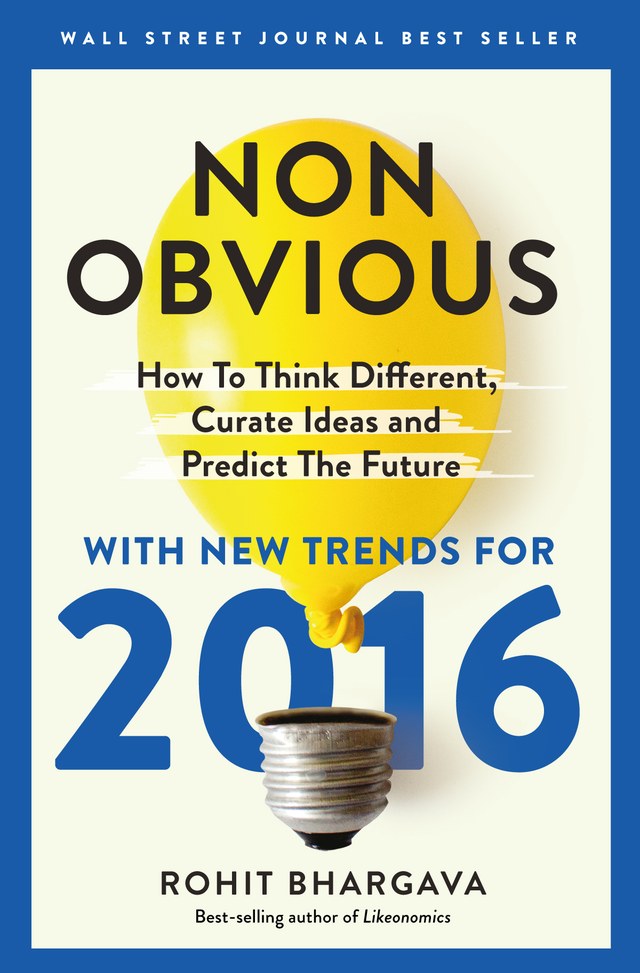
2016 Non-Obvious Trend Report
 Anti-Stereotyping2016
Traditional assumptions about gender, culture and lifestyles shift as the ways we define ourselves becomes more inclusive.
Read More About This Trend →
 Automated Adulthood2016
Technology automates the many "adulting" tasks twenty-something millennials encounter on their roads to independence.
Read More About This Trend →
 B2Beyond Marketing2016
B2B brands embrace their humanity and refocus on marketing to customers as people first and B2B buyers second.
Read More About This Trend →
 Data Overflow2016
Volumes of data are increasing at an exponential rate, creating a demand for practical and ethical tools that make sense of it all.
Read More About This Trend →
 Earned Consumption2016
In a quest for more authentic experiences, consumers are willing to "earn" opportunities to buy exclusive products and services.
Read More About This Trend →
 E-mpulse Buying2016
Mobile devices in retail stores allow for real-time marketing opportunities and encourage more impulse buying decisions.
Read More About This Trend →
 Heroic Design2016
Design is taking a front seat in innovating and modernizing the ways we plan our cities, homes, and futures.
Read More About This Trend →
 Insourced Incubation2016
Companies try a new model of "intrapreneurship" modeled after business incubators to bring innovation in-house.
Read More About This Trend →
 Mainstream Multiculturalism2016
As communities across the world become more diverse, brands are comfortable celebrating multiculturalism in the workplace.
Read More About This Trend →
 Obsessive Productivity2016
As people become reliant on devices, they become obsessed with saving time and optimizing every interaction.
Read More About This Trend →
 Optimistic Aging2016
People embrace aging with optimism thanks to the promise of longer lifespans, better health and more purpose in life.
Read More About This Trend →
 Personality Mapping2016
Companies use behavioral data to better understand customer motivations and segment them by personality.
Read More About This Trend →
 Strategic Downgrading2016
In a backlash against unnecessary tech, consumers choose simpler, cheaper, and more functional versions of products instead.
Read More About This Trend →
 Virtual Empathy2016
Immersive experiences increase empathy by helping people see the world through foreign and unfamiliar eyes.
Read More About This Trend →
 2015
2015 Non-Obvious Trend Report
 Branded Benevolence2015
Companies build stronger connections with consumers through their commitment to charitable causes.
Read More About This Trend →
 Disruptive Distribution2015
Creators and makers find ways to cut out middlemen and build more direct connections with fans and buyers.
Read More About This Trend →
 Engineered Addiction2015
Designers and engineers get better at creating addictive experiences that capture consumers’ time, money and attention.
Read More About This Trend →
 Everyday Stardom2015
Consumers expect personalization and VIP experiences from brands … whether they are paying for it or not.
Read More About This Trend →
 Experimedia2015
Content creators use real life interactions to study human behavior and build more realistic and entertaining narratives.
Read More About This Trend →
 Glanceable Content2015
Thanks to lower attention spans, marketers increasingly turn to "bite-sized content" to attract engagement.
Read More About This Trend →
 Mood Matching2015
As personalization tools grow, content and experiences become more adaptive to consumer moods and emotions.
Read More About This Trend →
 Predictive Protection2015
The integration of technology into our daily lives creates demand for intuitive products and services that protect and prepare us.
Read More About This Trend →
 Reluctant Marketing2015
Marketing departments are increasingly informing their organizations’ product development and research.
Read More About This Trend →
 Selfie Confidence2015
Rather than a tool for narcisists, selfies are increasingly appreciated as a modern way to encourage and boost self-esteem.
Read More About This Trend →
 Small Data2015
As consumers generate streams of accessible data through their online activities and connected devices, brand-owned big data will become less valuable.
Read More About This Trend →
 2014
2014 Non-Obvious Trend Report
 Anti-Stereotyping2014
Traditional assumptions about gender, culture and lifestyles shift as the ways we define ourselves become more inclusive.
Read More About This Trend →
 Collaborative Economy2014
Empowered by technology, people are able to design more efficient, collaborative sales models and products.
Read More About This Trend →
 Curated Sensationalism2014
Online “news” portals are abandoning traditional journalism in favor of smart curation and sensational stories to drive traffic.
Read More About This Trend →
 Distributed Expertise2014
As the web changes how we learn, expertise becomes more inclusive, less academic and more accessible.
Read More About This Trend →
 Instant Entrepreneurs2014
Better support, incentives and tools for entrepreneurs reduce the risks associated with failure and make starting a business easier.
Read More About This Trend →
 Lovable Unperfection2014
Consumers value true authenticity and appreciate the minor imperfections found in products, personalities and brands.
Read More About This Trend →
 Media Binging2014
On-demand programming is designed to be addictive as consumers develop an appetite for “binging" on their favorite content.
Read More About This Trend →
 Microdesign2014
The increasingly visual way that we present information and ideas creates a demand for efficient design and imagery.
Read More About This Trend →
 Obsessive Productivity2014
Fueled by social media savvy self-help gurus and time-saving apps, staying productive becomes an obsession.
Read More About This Trend →
 Over-Quantified Life2014
As tracking devices collect all sorts of data, brands and organizations struggle with how to make the best use of it.
Read More About This Trend →
 Privacy Paranoia2014
Data breaches and online tracking lead to increased unease about what governments and brands know about us.
Read More About This Trend →
 Shareable Humanity2014
With engagement as the ultimate goal, social media marketers make their content more human and emotional.
Read More About This Trend →
 Subscription Commerce2014
Businesses and retailers are making use of subscription models to bring just about anything to consumers' doorsteps.
Read More About This Trend →
 2013
2013 Non-Obvious Trend Report
 Audio Tagging2013
Audio content delivered via innovative technology helps brands generate deeper consumer engagement.
Read More About This Trend →
 Branded Inspiration2013
Brands use awe and inspiration to connect their products to big ideas in order to increase their perceived value.
Read More About This Trend →
 Degree-Free Learning2013
Thanks to developments in e-learning content, more students look for alternatives to traditional university programs online.
Read More About This Trend →
 Friend-Sourced Travel2013
As more travelers share reviews from their travel experiences online, a modern travel guidebook is generated on the Internet.
Read More About This Trend →
 Healthy Content2013
Healthcare organizations of all kinds aspire to truly empower their patients with more useful information about their health.
Read More About This Trend →
 Human Banking2013
Banks aim to win trust by reinforcing a human presence in all of their products and services.
Read More About This Trend →
 Hyper-Local Commerce2013
New services and better geolocation make it easier -- and wiser -- to keep some investments and purchases local.
Read More About This Trend →
 MeFunding2013
Platforms enable public fundraising efforts for anything from from taking a trip to funding college.
Read More About This Trend →
 Method Consulting2013
Companies create “on-the-side” consulting models to help others duplicate their successes.
Read More About This Trend →
 Micro-innovations2013
Thinking small becomes popular as seemingly insignificant adjustments to features or benefits create significant added value.
Read More About This Trend →
 Partnership Publishing2013
Content creators and publishing professionals team up to create more collaborative publishing models.
Read More About This Trend →
 Powered by Women2013
As pop culture promotes strong female characters, the world starts to imagine a world run by women.
Read More About This Trend →
 Shoptimization2013
New apps and startups focus on optimizing the purchase of everything from fashion to prescriptions.
Read More About This Trend →
 Social Visualization2013
Data visualization gets more personal as people create visual representations of their social lives and conversations online.
Read More About This Trend →
 2012
2012 Non-Obvious Trend Report
 Changesourcing2012
People collaborate to bring about social change through using the power of crowdsourcing ideas and action.
Read More About This Trend →
 Civic Engagement 2.02012
Technology offers citizens new ways to become more active in their communities and governments.
Read More About This Trend →
 Co-Curation2012
Technology allows people to pool their expertise in order to curate more effective content and insight.
Read More About This Trend →
 Corporate Humanism2012
Companies make an effort to humanize their approaches to company culture, hiring, and marketing.
Read More About This Trend →
 Digital Afterlife2012
New tools help people create online memorials and manage the logistics associated with a loved one's passing.
Read More About This Trend →
 Ethnomimicry2012
Using ethnography to derive insights about human behavior and culture inspires better products.
Read More About This Trend →
 Measuring Life2012
Tracking tools and wearables offer personalized data to monitor and measure daily activities.
Read More About This Trend →
 Medici Marketing2012
Insight from a variety of disciplines is being used to make marketing more engaging, creative and useful.
Read More About This Trend →
 Pointillist Filmmaking2012
As video creation tools become more user-friendly, filmmakers are making use of the growing stream of user-generated video content.
Read More About This Trend →
 Real-Time Logistics2012
Data and online conversation is used to inform and update supply chain and logistics in real-time.
Read More About This Trend →
 Retail Theater2012
Retailers develop interactive and engaging in-store experiences to compete for increasingly demanding customers.
Read More About This Trend →
 Social Artivism2012
Artists use social media to make powerful statements and support social causes that matter to them.
Read More About This Trend →
 Social Loneliness2012
People with busy online social lives feel an increasing sense of loneliness in real life.
Read More About This Trend →
 Tagging Reality2012
People use keywords and tags to better connect virtual content with physical objects and locations.
Read More About This Trend →
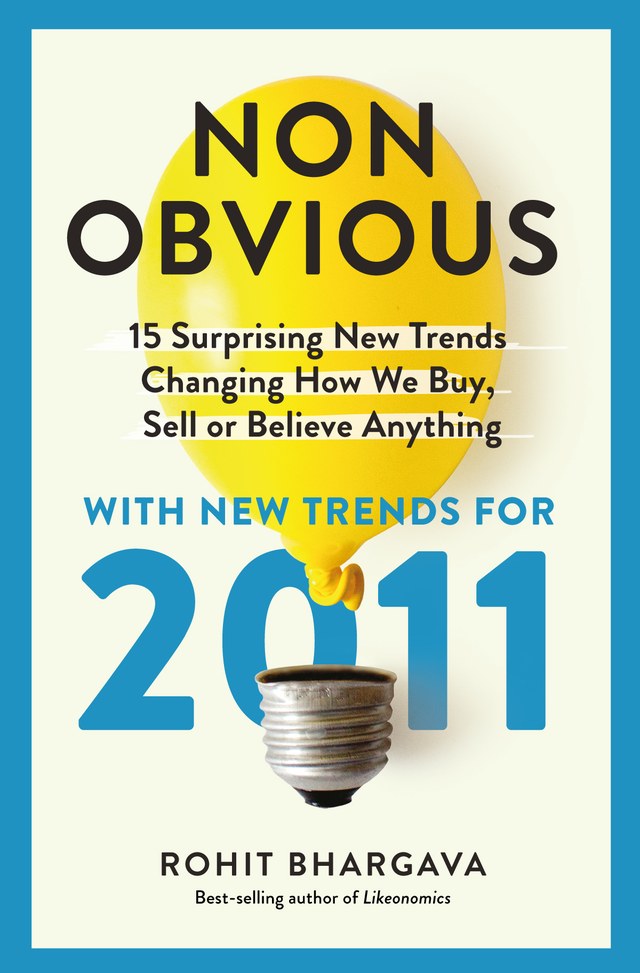 2011
2011 Non-Obvious Trend Report
 Addictive Randomness2011
As consumers are drawn into stories about unusual topics, organizations engage audiences through more varied subject matter.
Read More About This Trend →
 App-fication of the Web2011
Innovative apps allow consumers to bypass the web for transactions and leisure activities.
Read More About This Trend →
 Brutal Transparency2011
As consumers demand transparency from brands, marketing campaigns take on a more honest, "real" tone.
Read More About This Trend →
 Culting of Retail2011
Certain retail brands enjoy unprecedented levels of loyalty from customers that want a connection with the brands they buy from.
Read More About This Trend →
 Desperate Simplification2011
Information overload leads consumers to seek simplification in all aspects of their lives.
Read More About This Trend →
 Employees As Heroes2011
Companies demonstrate their humanity by celebrating their employees' achievements, quirks, and personalities.
Read More About This Trend →
 Locationcasting2011
Geo-targeted marketing opportunities escalate as consumers broadcast their locations through their devices.
Read More About This Trend →

 Unnaturally Better
 Branded Utility
 Mainstream Mindfulness
 Microconsumption
 Reverse Retail
 Unperfection
 Branded Utility
 Desperate Detox
 Backstorytelling
 Heroic Design
 Optimistic Aging
 Precious Print
 Charitable Engagement
 Approachable Celebrity
 Crowdsourced Innovation
 Essential Integration
 Instant PR & Cust Service
 Likeonomics
 Reimagining Charity
 Rise of Curation
 Visualized Data