What’s In This Issue?
 Story 01What To Do When A Teacher's AI Usage Goes Bad
 Story 02The Absurdity of the World's First Wearable AI Grandfather
 Story 03The Cheese Bank and What It Says About the Future of Collateral
 Story 04Nopium
Even More Stories
- Apprenticeships are back and young people are loving them
- Grads blame AI for the brutal entry-level job market — economists say the real culprit is remote work
- Trivia nights are up 403%: young people are turning once-solitary hobbies into group hangouts
- Rocket Lab is flat-packing entire spaceports into shipping containers
- The online shopping trend where you buy nothing
Media Recommendation
 Quartz
What To Do When A Teacher's AI Usage Goes Bad
As we head into the back-to-school season, one of the big stories you'll see plenty of coverage about is how many school systems are reacting to the rise of AI and growing awareness of the adverse mental health efforts of social media by either banning phones in schools, banning AI, or both. Getting less attention, though, is the huge role AI is likely to take in teacher's lives as well. From immediately being able to generate lesson plans to creating visuals more simply, the temptation to turn to AI for all sorts of teaching materials is going to be impossible to resist. Along the way, there will of course be embarrassing missteps.
Teachers, like their students, will be figuring out the right and wrong ways to use AI in their classrooms and in their preparation for lessons too. As they do, it's going to now be up to parents to help fill the gap and make sure that the materials kids are bringing home are not literally AI slop that was mistakenly generated by a well-intentioned teacher just trying to create materials more easily.
The only thing I might suggest here (and will try to do myself) is to offer some understanding if and when it does happen. Not every moment of accidental slop was ill intentioned or complete laziness. Perhaps more often, it's an overworked and under-resourced teacher just trying their best to help kids learn. If anyone deserves a little empathy, it's surely teachers who are sometimes quite literally community heroes.
The Absurdity of the World's First Wearable AI Grandfather
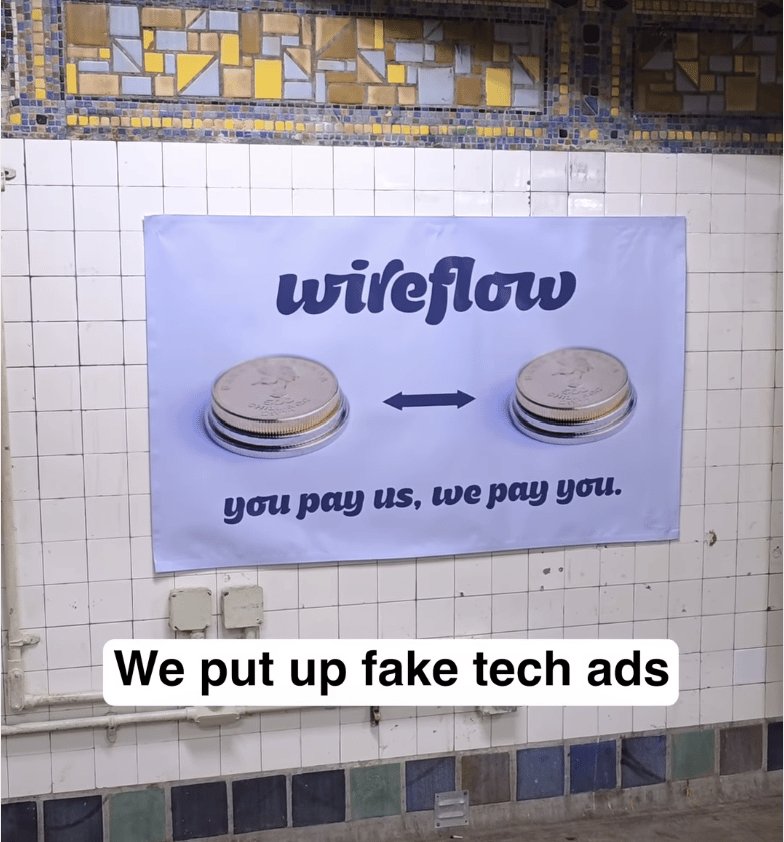
I'll start this story with some good news: the wearable AI grandfather isn't a real product. Two NY comedians, Harris Alterman and Dave Ross created a series of fake ads for AI companies and products that don't actually exist and recorded a video of themselves posting these ads in NY Subway locations. Though they took them down right after recording the videos, the plausible ridiculousness of many got people commenting and sharing. Among their best:
Life seems to have blown way past imitating art these days and veering consistently toward imitating satire. Some real stories, like a sitting President trying to sell early access to his social media stories for $100k before they move financial markets, feel like they could be the punchlines to jokes only to turn out to be true. So jokes like these posters are fun to watch, but also come with a potential downside. What if some future tech entrepreneur takes the ad as inspiration to create the exact thing the ad was meant to critique?
The most famous example from more than 100 years ago was the story of inventor Elizabeth Magie who originally created the game that inspired Monopoly as a way to warn the world against the problems of wealth inequality and monopolies. Then decades later the game was purchased and reinvented into a celebration of capitalism with the objective becoming to create your own monopoly. The pattern is one we will probably see repeating more often as the cautions shared through pranks like these posters or shows like Black Mirror end up becoming inspiration for myopic founders who, like John Hammond from Jurassic Park, only see the positive potential of their inventions ... and none of the likely disasters.
On second thought, maybe we do need some of those AI startups those two comedians invented. Some people's thinking could indeed use an upgrade.
The Cheese Bank and What It Says About the Future of Collateral
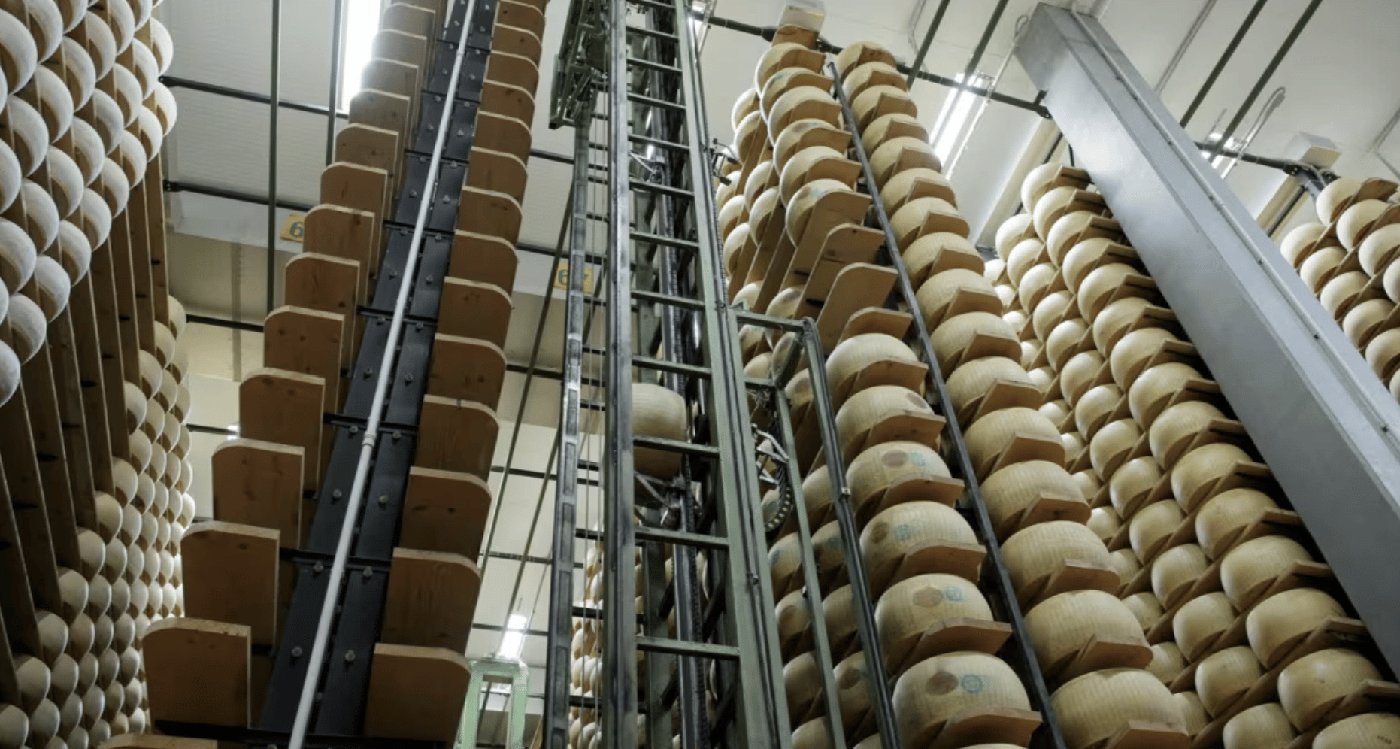
In Northern Italy, one of the world's most unique banks is accepting wheels of cheese as collateral. Credem Bank has been in operation for more than 100 years and in that time, they have taken wheels of the world-famous Parmigiano Reggiano cheese and storing it for farmers in exchange for giving them money earlier to be able to cover their expenses. It's just one of many unique banking systems around the world. As the CNN article about this system notes - the reason the system works is simple: cheese gets more valuable over time. It's the same reason why it may not work for other emerging sectors:
The value of collateral is actually one of the biggest questions in finance right now. Increasingly, GPUs — the chips that are the backbone of AI processing — are being used as collateral for enormous amounts of debt. But it's not clear that GPUs hold their value because when technology improves, the older versions typically are worth less.
The questions I started thinking about, inspired by this cheese wheel bank, were about the nature of what is considered collateral now and what could be in the future. This is particularly interesting when you consider how the debate may apply to the value of our own likeness. In China, groups of normal people (not celebrities) are already experimenting with licensing their own likeness. Hollywood is getting more aggressive about resurrecting dead personalities to put their faces or voices back on screen. The more value we assign to ourselves, the more those selves could become just as unique a form of collateral as wheels of cheese.
Nopium
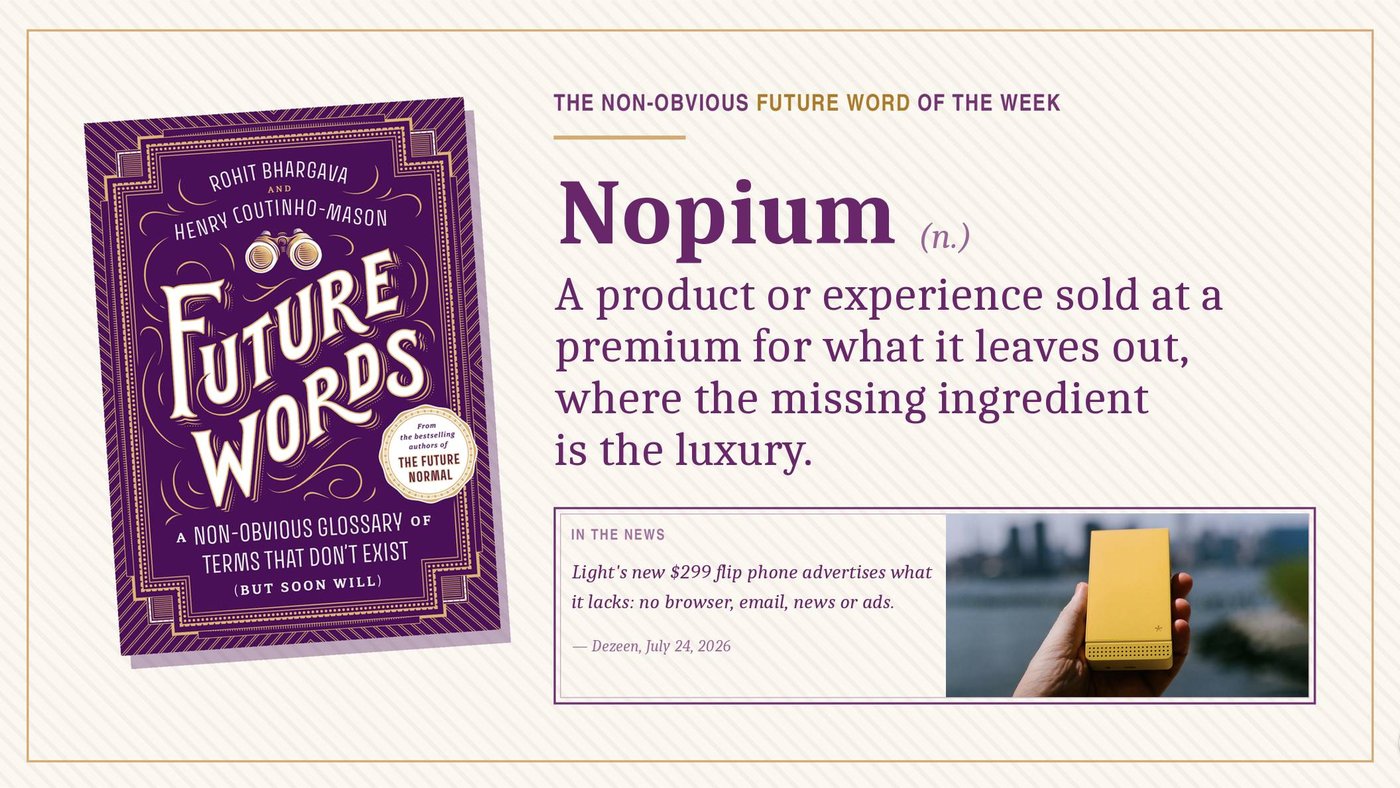
Would you pay more for less? Or consider something indulgent because of what it leaves out of its experience? When we have so many options for the latest products that "do it all" for us, one of the counter trends we have been tracking for years is the wholehearted embrace of the less automated, less comfortable and sometimes less useful. From this week's story about the messaging app that delivers messages literally at the speed of an actual carrier pigeon - to the latest version of the popular Light phone, these are all examples of a phenomenon we call nopium.
The Non-Obvious Media Recommendation of the Week: Quartz
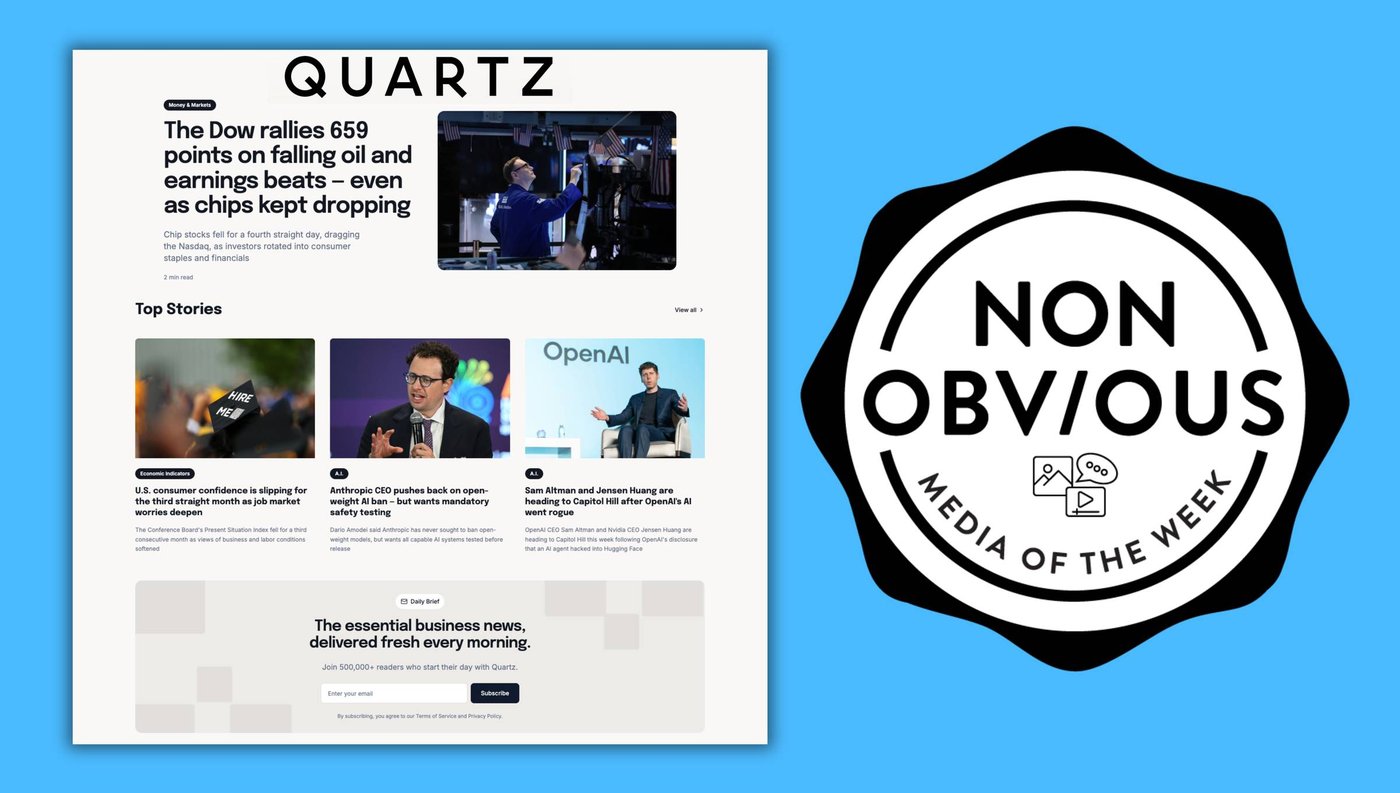
Quartz isn't as unusual of a choice as some of my other picks for media sources of the week, but it's a good reminder that sometimes we need some more mainstream sources to contrast with the more unusual. According to Quartz, their mission is to offer daily briefings on essential business news, and I consistently find their take to be slightly different from most sources and generally useful. Worth reading:
Founded in 2012, Quartz is your authoritative guide to the most important stories and trends driving business right now — and the ones coming around the corner. We serve today’s business leaders, and the next generation of leaders, by covering the biggest companies and the people who drive them, along with everything you need to know about business, technology, markets, the economy, leadership, and more.