What’s In This Issue?
This Week’s Main Stories
 Story 01Can Seaweed Mining Become The Next Billion Dollar Industry?
 Story 02Lessons From Daniel Radcliffe's Journey To Leave Harry Potter Behind and Reinvent Himself
 Story 03Playgrounds and Swing Sets Aren't Just For Kids Anymore
 Story 04Reid Hoffman Interviews An AI Cloned Version Of Himself To See How Good It Really Is
Even More Stories
- Nike Designs Poncho That Can Transform Into A Full Tent
- Analogue technology can be frustrating – is that part of the appeal?
- No Oscar Category For Stunt Work? This New Film Could Change That
- California Gets a Taste of What a Real Planet of the Apes Might Look Like
- AI Startups Are Too Power Hungry, But Scientists Are Working On A Solution
Can Seaweed Mining Become The Next Billion Dollar Industry?
A tiny branch of the US Department of Energy focused on high-risk projects just awarded $5 million dollars to three startup ventures that are each independently "investigating whether seaweed can serve as a practical source of critical materials, such as platinum and rhodium, as well as rare earth elements, including neodymium, lanthanum, yttrium, and dysprosium."
Aside from protecting coastlines, sheltering marine life and even serving as a food source for humans ... scientists think seaweed may also be quite good at capturing and storing these precious minerals. The interesting thing is that in order for this to make financial sense, these researchers need to find a way to extract the minerals WITHOUT destroying the seaweed in the process.
This makes it different from many other forms of mining that leave land barren or destroyed afterwards. In fact, environmental advocates hope that this sort of mining, if it works, could eventually replace more destructive types and help protect the Earth in the long run.
Lessons From Daniel Radcliffe's Journey To Leave Harry Potter Behind and Reinvent Himself
If you were cast into the role of a lifetime at the age of 11 and went on to play one of the most beloved bespectacled characters in modern movie (or book) history, what would you do when the series was over? Plenty of child stars struggle to leave the past behind, choosing to either escape the spotlight altogether or trying and failing to recreate their success. Daniel Radcliffe is different.
In this profile piece about his journey to be seen as more than just the boy wizard from JK Rowling's book series, you might just find some useful insights about what it takes to reinvent yourself at any age. It is the reinvention that often makes people fascinating.
So if you happen to be in a moment of your life right now where you're trying to figure out what to do next, consider this beautiful thought ... if the actor who grew up playing Harry Potter can break out of how people see him and become more than that, you can too.
Playgrounds and Swing Sets Aren't Just For Kids Anymore
Here's a radical thought that really shouldn't be: what if playgrounds were designed for teenagers instead of younger kids? At the Anna C. Verna Playground in Philadelphia’s FDR Park, that's exactly what they did and it's getting rave reviews and lots of usage so far.
The idea is an intriguing one because it challenges our perceptions of how spaces should be used. Great urban design should work for as many people as possible. It's also why I love this idea of designing a playground to remind people of all ages about the importance of play.
Too many playgrounds are built as places for parents and caregivers to watch their kids play. Not enough are designed to let adults play alongside those kids. Or on their own. When we can, it not only has a positive impact on our lives, it makes our communities nicer places to live too.
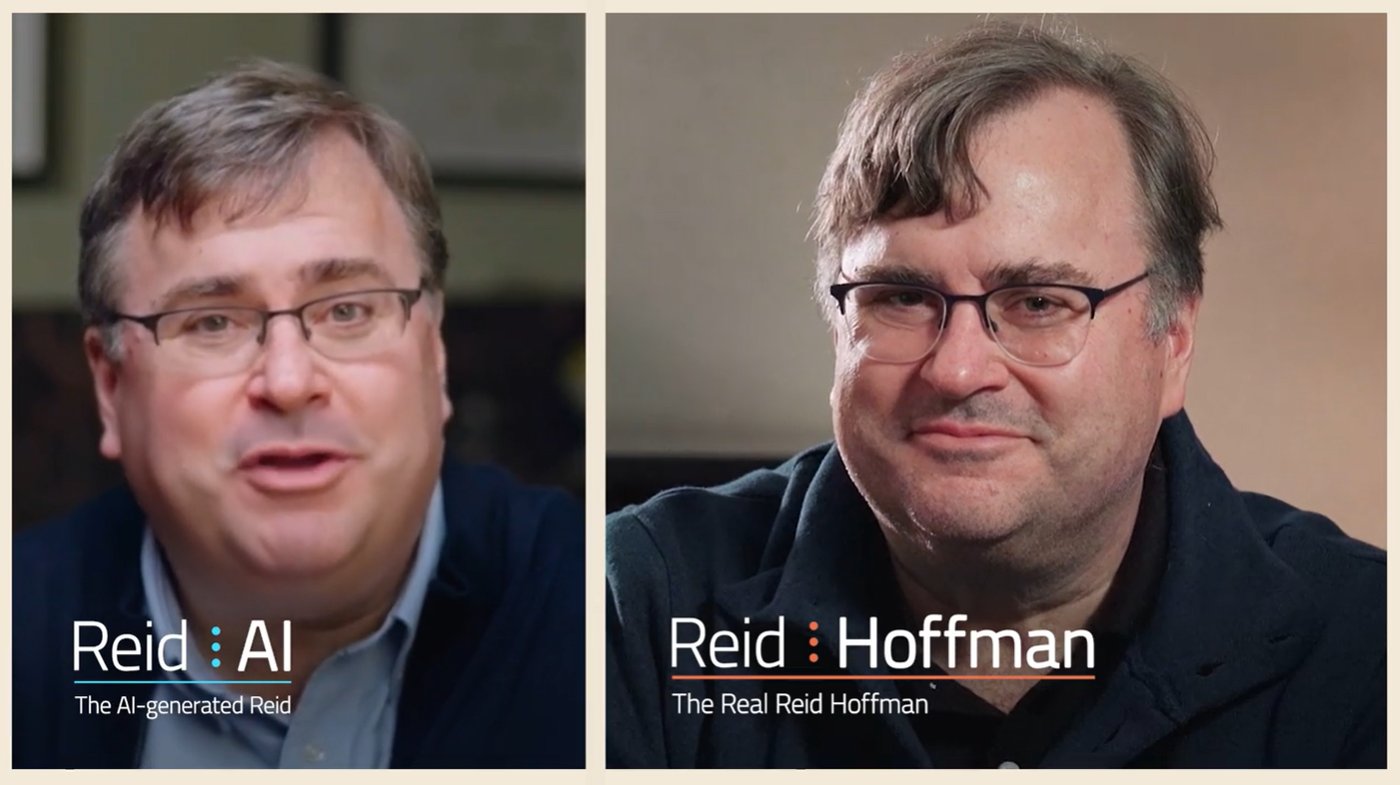
Reid Hoffman Interviews An AI Cloned Version Of Himself To See How Good It Really Is
When you are a notoriously geeky tech billionaire, having an AI clone of yourself built and trained on all your books and public videos and then interviewing yourself probably seems like a good idea. Netflix founder Reid Hoffman just did that, and started by asking his clone to summarize one of his books in the fictional Star Trek language of Klingon.
It's a bit of fun to introduce a wildly controversial idea: realistic AI clones nearly indistinguishable from the real person it was trained on.
As you watch this interview, you'll have to admit the depiction is pretty realistic. In the conversation, Reid does briefly tackle the big question about the ethics of this technology while simultaneously dismissing is as relatively unimportant in his case because he's "doing it collaboratively."
Is permission enough here? What happens if others get their hands on his clone and use it in their own ways which may not be so innocent? And is the idea that an AI clone of any of us actually be controlled an illusion in itself? This raises so many questions, which may not be answered fully for a decade or longer.