What’s In This Issue?
This Week’s Main Stories
 Story 01Words That Don't Exist (Yet) - A Big New Book Announcement!
 Story 02Huggies Expensive Sht and the Age of Experiential Advertising
 Story 03Meta and Amazon Both Prove In the Same Week That Tech Company Greed May Have Some Limits
Even More Stories
- The 'Gen Z pout' is the new selfie face. The subtle expression hints at how young people see beauty
- US Banks May Soon Phase Out Paper Checks Even Though A Surprising Number of People Still Want Them
- Donations for Unpaid TSA Agents, Growing Lines: The Shutdown Hits U.S. Airports
- Reporters Without Borders adds a US room to its Uncensored Library in Minecraft
- AI companies want to harvest improv actors' skills to train AI on human emotion
- Scientists tracked coffee drinkers for dementia risk over 43 years. Here's what they found
Media Recommendation
 1440 Daily Digest
Book Of The Week
 China's 90% Model
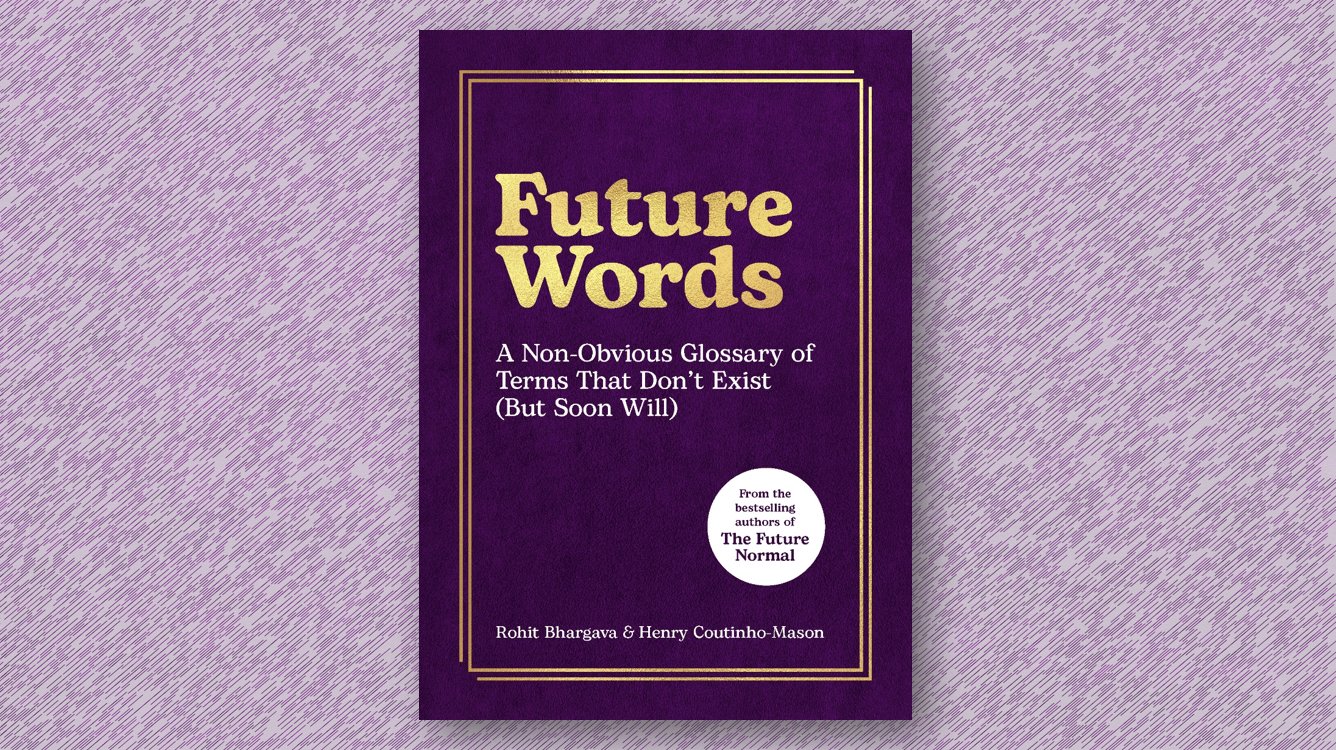
Words That Don't Exist (Yet) - A Big New Book Announcement!
If you happen to catch some of the news coming out of SXSW last week, you'll already know that I made a big announcement from the stage about my new book coming out in October: Future Words. It is already up for pre-orders on all retailers and if you do pre-order a copy NOW and let me know by email, I have a few bonuses that I can share with you over the next few months including:
- An advance preview of the full book before it comes out
- A chance to contribute words (and get featured in the book!)
- More special, secret, non-obvious swag and cool stuff that I haven't come up with yet but will definitely be worth it! :-)
Regarding the book itself, the vision is to create a compendium of words that will exist in the future but don't yet, to describe scenarios, people, situations and emotions that we are currently living with, but that language has not yet been named. What kind of words?
Since I know you're wondering - here are a few words that I shared from the stage that we will probably include in the book:
- Angorithm - A system designed to use rage as a reliable method to incite engagement and capture attention.
- Credentropy - The gradual erosion of trust in institutions, experts and credentials until no one believes anything anymore.
- Riftmonger - One who deliberately sows division and manufactures chaos among others for personal gain.
- Sloptimism - The genuine inability to tell when the output from AI is noticeably terrible. Most often practiced by sloptimists.
- Shallowing - The active process of becoming less thoughtful and more coddled as a result of overly helpful technology.
Huggies Expensive Sht and the Age of Experiential Advertising
Stunts are nothing new in the world of marketing, but they are not usually done via live streaming or including quite so specific of a problem as diaper blowouts. When Huggies wanted to showcase their "blowout-proof" diapers that guarantee to keep that poop contained--they decided to prove it in real time. The resulting campaign dubbed "Expensive Sh*t" shows recently fed babies crawling around on top of expensive items like a white wedding dress or an expensive car. The one-hour live stream is super watchable and brings the idea to life in a fun and terrifying way. It's also a technique that more marketers may turn to as a way to capture fractured attention and get past the hurdle of people increasingly dismissing things as potentially AI created. Thankfully, the diaper works and the blowouts are contained. Otherwise, that shit would get super expensive ... and no one wants to see that.
Meta and Amazon Both Prove In the Same Week That Tech Company Greed May Have Some Limits
This week, three seemingly unrelated stories offered a glimpse into a perhaps hopeful version of reality. After losing over $84 billion dollars, Meta finally shut down their VR platform Horizon Worlds. Over the same span of time, other virtual platforms such as Second Life (launched in 2003) have built a hugely loyal audience. Analysts suggest Meta's failure came down to their refusal to let creators copyright their content and their predatory commissions model only offering creators 52.5% of the revenue they create. In contrast, Second Life's virtual economy moves roughly $650 million per year, and Linden Lab has paid out $1.1 billion to creators over the platform's lifetime.
The other two stories both involved Amazon, where the first is about the backlash against the brand for potentially causing a financial crisis at USPS due to their refusal to negotiate rates and allegedly demanding unsustainable concessions (a well known pattern for a brand known for using their monopoly to strong-arm partners in negotiations). The second is about the brand's announcement that they will start offering 1 and 3 hour deliveries in some cities, which experts also warn may lead to more injuries, accidents and other "human horrors." What's the theme between these stories? Well, firstly the fact that they are stories at all. Often these sorts of impacts are hidden as the cost of doing business so it's a positive sign to see them getting so much attention. It does also point to a broader shift where companies increasingly need to answer for the human impacts of the ways that they choose to make money. For that reason alone, it's worth paying attention to and sharing.
The Non-Obvious Media Recommendation of the Week
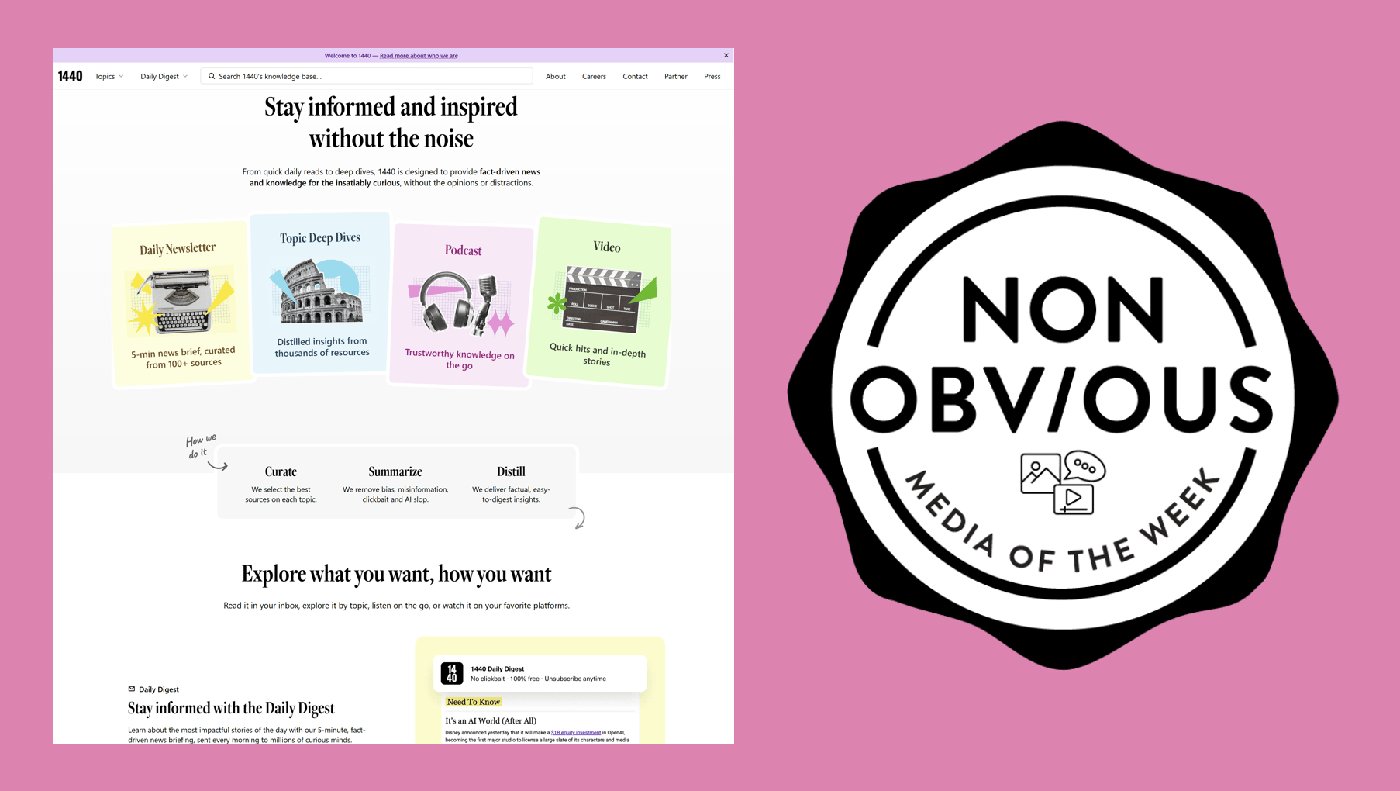
1440 Daily Digest
"A knowledge collective built on curiosity, connection, and care for the truth. Here, facts matter, thinking is valued, and people come together to understand the world. We believe curiosity is more than a trait—it's a muscle. Exercised daily, it sharpens the mind, fuels discovery, and drives lifelong growth. That's why we deliver knowledge curated by real humans, for a community of insatiably curious minds, just like yours. The next great knowledge revolution won't come from more noise, but from a movement of people hungry for better."
The Non-Obvious Book of the Week
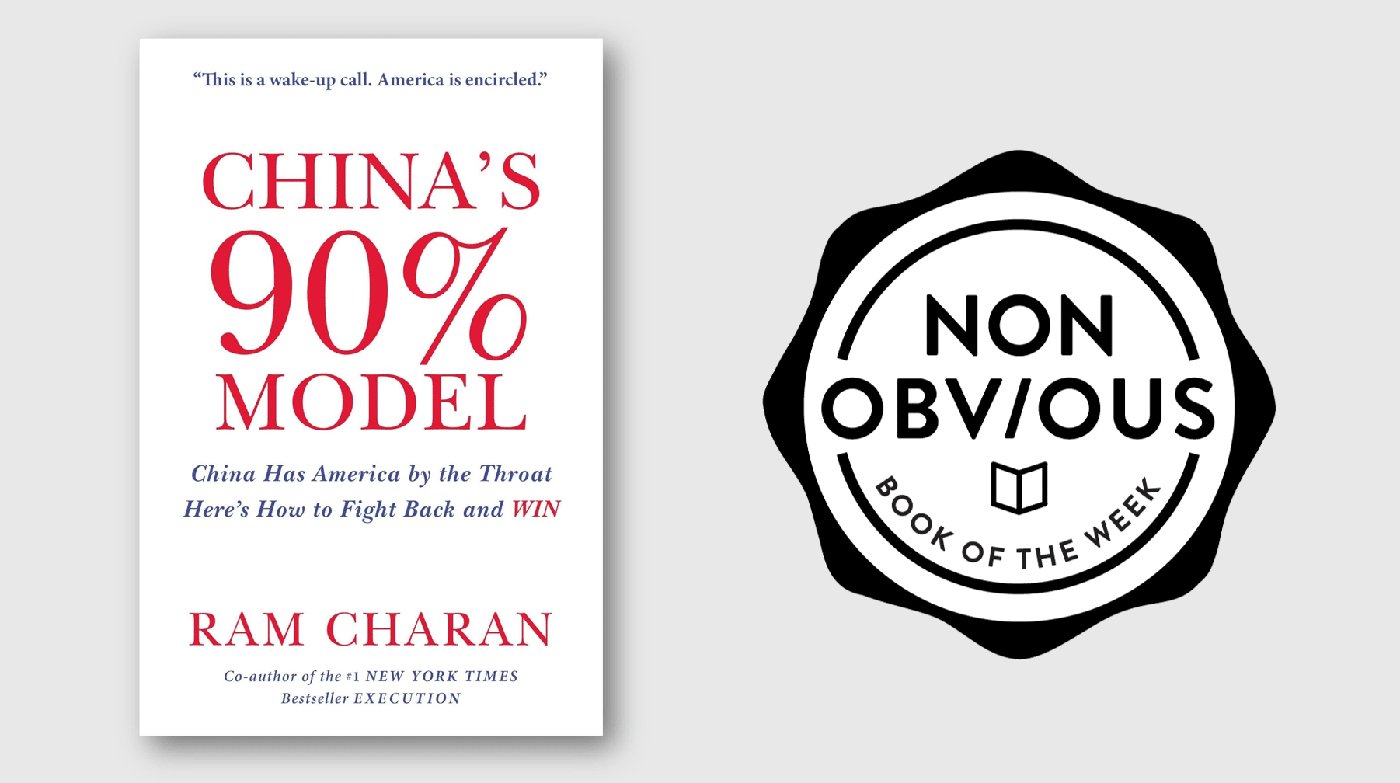
China's 90% Model
Despite the recent postponement of the highly anticipated US-China Summit, now is a perfect time to better understand the state of relations between these two superpowers and this timely book is the ultimate guide to all the factors most people aren't writing or talking about. Written by renowned business leader and CEO advisor Ram Charan, China's 90% Model offers the provocative perspective that "America is losing a war it barely knows it's fighting." Based on dozens of interviews and trips to China over more than a decade, along with firsthand conversations with global CEOs - this is a clear-eyed look at the current political and economic tension between these two nations along with a perspective on what it would take for America to emerge again and shift its trajectory.