What’s In This Issue?
This Week’s Main Stories
 Story 01How Bad News Might Be Making Us Worse Humans
 Story 02The Real Reason HBO Is Waiting 4 Days To Share Clips of Last Week Tonight With John Oliver
 Story 03How AI Might Be Getting "Lazier" And What To Do About It
 Story 04ADD+SPACE Wants To Become A New Airbnb ... For Your Stuff
 Story 053 Observations From TikTok's New 2024 Trend Report
How Bad News Might Be Making Us Worse Humans
We might all be getting addicted to bad news. I was thinking about this point as I considered my own reactions to two other disturbing stories I read this week. The first was about an outbreak of measles in a Broward County Florida school where 11 kids were unvaccinated and over 100 may now be at risk.
The second was a new campaign by controversial political activist group The Lincoln Project which used AI to bring Donald Trump's emotionally abusive father back to life to berate his son about how ashamed he is. Your reaction to both stories almost certainly depends on your beliefs ... but should it?
Both stories are sad and have identifiable victims. Children are getting sick due to their parent's choices, and a man who was likely abused as a child is being targeted in an attempt to have him relive that trauma as an adult. These aren't the sort of stories that anyone should take pleasure in, but some are. Which leads to the question - is reading a stream of bad news making us bad people?
The Real Reason HBO Is Waiting 4 Days To Share Clips of Last Week Tonight With John Oliver
HBO announced they will now force people to wait four days before sharing on YouTube the highlights from Last Week Tonight with John Oliver. Of course, fans of the show online were pointlessly indignant. Their fury demonstrates exactly what the problem has become for most entertainment creators and news organizations alike online ... people expect content to be free.
In response, HBO candidly share that they hope this move will entice more fans of the show to subscribe to Max so they can watch the full show in its entirety. Good for them. I love the message they are sending to their critics:
You don't have a "right" to watch entertainment we paid to produce for free and we don't have an obligation to give it away. If you love the show, please pay us $9.99 and you can watch it as a subscriber. Or shut up and wait.
As I have written before when it comes to other forms of media - if you love to watch or read something, you should be willing to pay for it too.
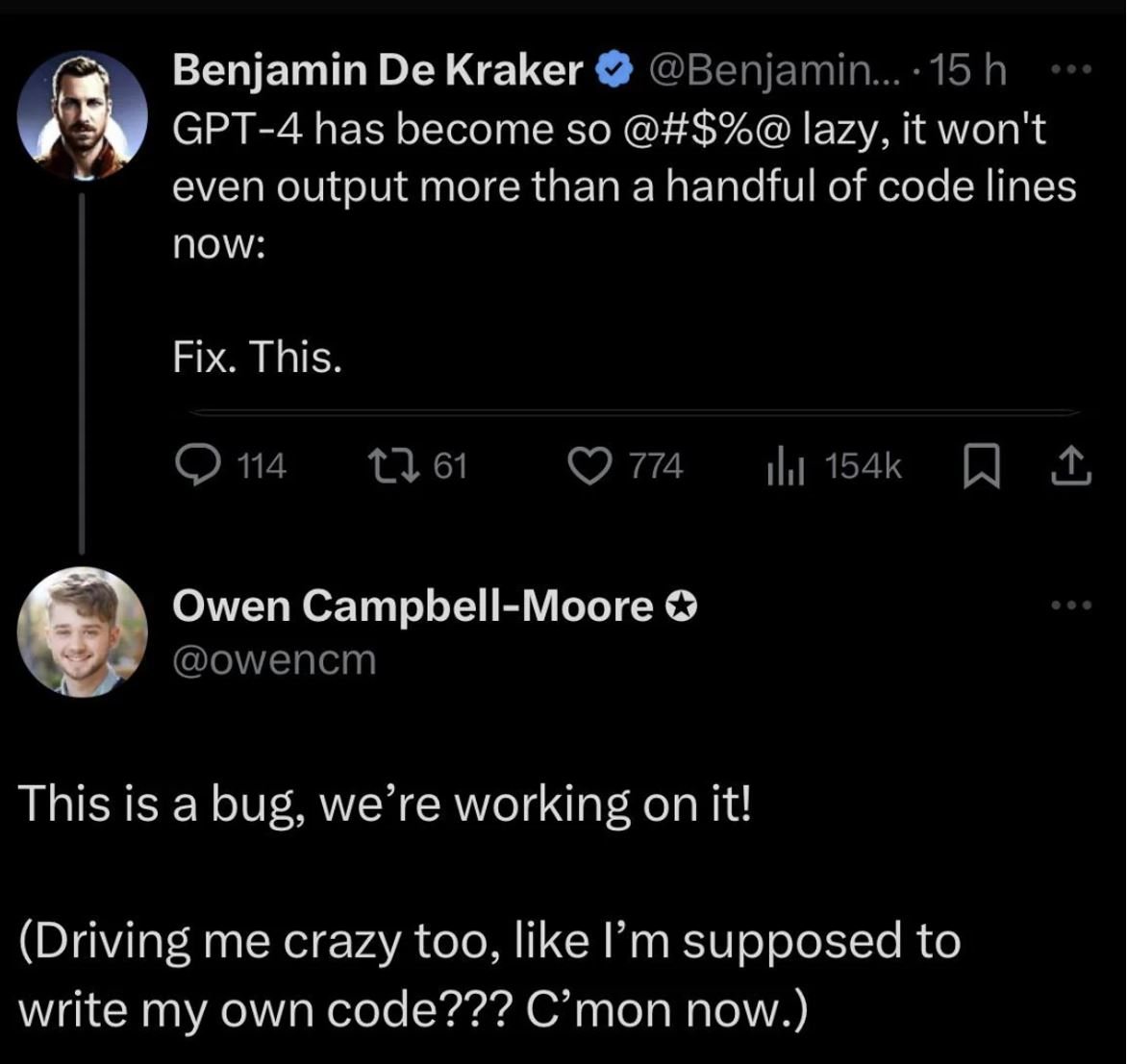
How AI Might Be Getting "Lazier" And What To Do About It
What if you had to "convince" ChatGPT to give you a better or more in-depth answer? Some users are suggesting a "winter break hypothesis" to explain why AI sometimes seems reluctant to do hard work. While the claims are unproven, OpenAI acknowledged the criticism from several users via Twitter and noted that they are "working on it."
To some, this quirk makes sense. After all, if the language learning models are trained on our behavior, why wouldn't they also simulate seasonal depression? It's a useful reminder that what we put into the tool is what we get back. So if you're only using AI when you're too lazy to do any actual work yourself, you might want to get ready for ChatGPT to throw some lazy answers right back at you.
ADD+SPACE Wants To Become A New Airbnb ... For Your Stuff
Imagine you're living in a cramped apartment with a bunch of extra stuff that you don't need year round. You could keep it at your parent's house - if you're a young person and they live nearby. Or get a storage locker, which is inconvenient and requires a lot of effort.
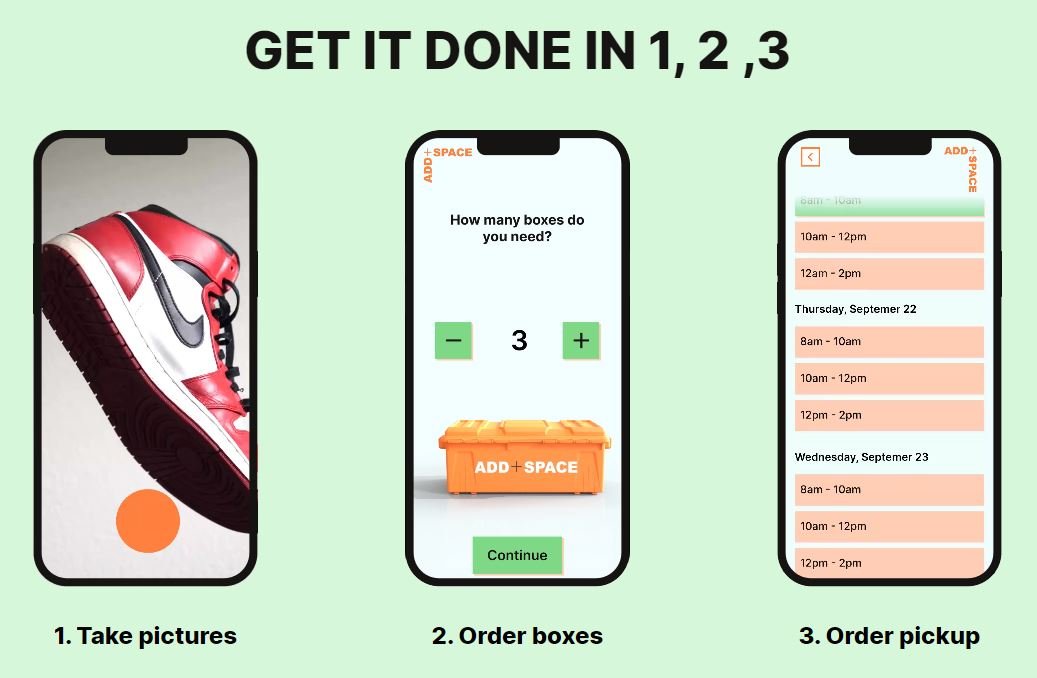
Or you could try ADD + SPACE, a new startup (available in NYC only at the moment) which lets you take photos of your items and store them in an orange waterproof box that will get picked up by a courier and taken to a nearby storage facility. Any time you want your stuff back, just request it like you'd get a ride-sharing car.
It's easy to see why this idea would be a winner. If they do add in a component where people can rent excess storage space in their homes for this, it could also open up a whole new market for people to essentially Airbnb a portion of their basements. I was intrigued by the idea. Would you use it as a storage option or lease out space? Why or why not?
3 Observations From TikTok's New 2024 Trend Report
The newly released TikTok 2024 Trend Report offers more than a few to-be-expected trends that are essentially meant to promote the platform to advertisers ... but some of the insights also offer some useful cultural commentary. Here are a few observations that stood out for me:
- Serendipitous Scrolling - TikTok users often discover unexpected new passions that they didn't expect. The report suggests a marketing opportunity to use breakout creative (not that easy!) to make use of the serendipity.
- Upside of "Delulu" - What started as a slang term for delusional also may explain how "TikTok audiences are building a shared community of delusional comfort to provide a spark of lightheartedness in an overwhelming reality." For brands, the advice is to lean into the emotional side of content before sharing.
- Openness Builds Trust - Some conclusions are decidedly old school, such as their observation that consumers trust brands who leave comments turned on 1.5 times more. Which brings to mind a truth that has been known since the start of social media marketing 20 years ago: it pays to start with listening.