What’s In This Issue?
 Story 01Rediscovering the Beauty of the Archive
 Story 02How Crocs Is Taking a Page From LEGO’s Marketing Playbook
 Story 03In a World of Digital Silence, What Should Anything Sound Like?
 Story 04Southwest Airlines Is Killing Their Open Seating Policy and I’m Confused …
 Story 05Ultralearning by Scott H. Young
Rediscovering the Beauty of the Archive
Since starting my blog in 2004, I’ve easily written more than a thousand articles. When you add in books and social media posts, that’s a whole heap of content. While some of it is outdated, since there’s no easy way to resurface this past thinking, it all remains buried. This week I read an article that explored the curious popularity of an archival social media account created by public television employee James Auclair to share old b-roll clips of daily life from the 60s and 70s. They have gone viral.
The grainy videos offer up a snapshot of a lost world and encourage people to lean into the nostalgia of remembering a time without smartphones and AI that just felt simpler. These videos offer the experience of “time-traveling back to some precise moment where nothing of note happened,” while also helping us appreciate the progress baked into the way we live our lives today. The story got me thinking about the importance of bringing some of my own “old” content back to life. What insights might I rediscover to share with you from something I wrote five, ten or even fifteen years ago? I’m going to start looking at this and I’ll come back to share what I discover in a few weeks.
How Crocs Is Taking a Page From LEGO’s Marketing Playbook
Brand partnerships can be tricky. One partner may eclipse the other. It can be hard to stand out or make the right commitments. I’ve always admired the way LEGO used partnerships to leverage the content and stories of their partners but add their own unique lens through the various items you could build through co-branded LEGO sets with nearly every popular movie franchise series, from Marvel to Harry Potter. Recently, some lists of the many varied collaborations the Crocs brand has been doing are starting to get featured. The breadth of these partnerships is impressive and has played a big role in helping transform their brand reputation from the ultimate ugly footwear to an unabashed self-described “comfort brand.”
This shift is already described by some industry observers as “one of the great brand turnaround stories.” From celebrity collabs with music stars like Luke Combs or Bad Bunny, to branded shoes for household names like Pringles or Jolly Ranchers, to movie tie-ins with brands like Star Wars or SpongeBob - the full gallery of all the designs is extensive.
In a World of Digital Silence, What Should Anything Sound Like?
Electric cars are quiet. Maybe too quiet. The problem, as some public health groups warn, is that electric cars dramatically increase the risk of accidents with pedestrians. The absence of sound creates danger, because we expect to be able to hear a car coming. Now that legislation spearheaded by groups advocating for the blind and visually impaired is starting to require electric vehicles to emit “an artificial engine noise,” the new challenge is what this sound should be. Do car makers just copy the engine sound from existing cars? And if so, which car? Should all electric cars be required to sound the same?
While the question may seem unique to vehicles, a similar challenge has come up with other technology too. Digital cameras and smartphones, for example, generally now have an option to turn on an artificial shutter sound so you can audibly hear that a photo was taken. Digital doorbells simulate the sound of a bell even though they don’t always have a physical bell attached anymore. Car horns, bike bells, smoke detectors and countless other products that have gone digital also have a similar sonic challenge of creativity. Should the sounds each of these things make just aim to copy the current analog sound or is this a chance to rethink old conventions? I’d love to hear what you think. Just hit reply to this message and let me know!
Southwest Airlines Is Killing Their Open Seating Policy and I’m Confused …
Let me go on record saying that I think open seating on an airline flight is an idiotic idea. I’ve always hated it, and generally avoided flying Southwest Airlines partially because of this. The concept that you can’t book an actual seat and instead have to arrive early and wait in a line just so you can get the best possible seat is something I might have done in my 20s to get into a concert. But now in my 40s boarding a flight, it’s a level of uncertainty that feels totally unnecessary. The announcement that the airline is (finally) killing this policy was welcome news for me as an avid traveler, but I realize that I might not represent the views of many of their customers.
Analysts and customers are openly wondering if this move is likely to backfire for Southwest, removing part of what made them different from all their competitors for so many decades. This seems to suggest that open seating was popular. Since I generally fly United (they have the most non-stop flights across the world from my DC-based home airports), I’m not the best judge of whether this will hurt the airline. If you fly Southwest, will their shift to assigned seating affect your choice to fly with them or not? Perhaps people really do love the chaos and stress of not knowing if they’ll end up with a middle seat or not until they board a flight. Southwest Airline frequent fliers and brand fans, what am I missing?
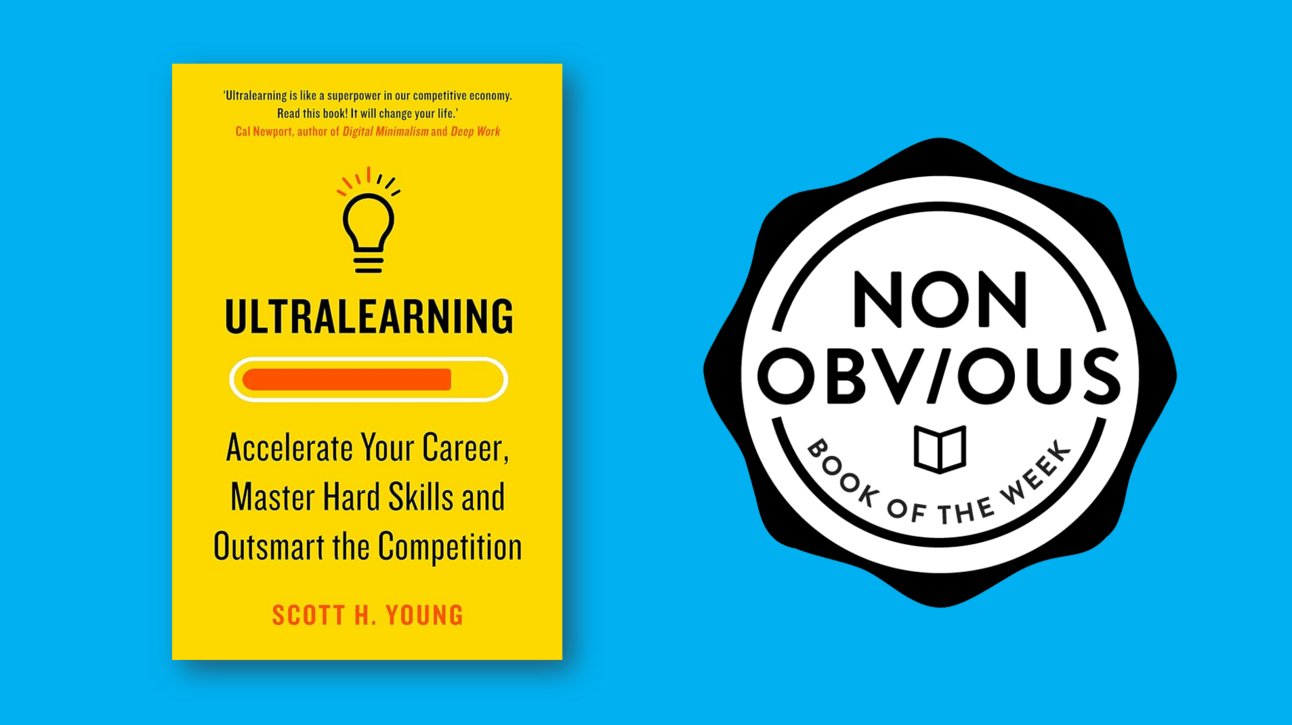
Ultralearning by Scott H. Young
As we head into the end of the summer and back to school times, learning might be on your mind and everyone else in your family too. Learning, of course, isn’t just for school and one of my favorite books all about how to learn better is Ultralearning by Scott H. Young. Nearly every page of this book is full of useful and non-obvious advice. Take notes as questions instead of answers. Attack your weakest point and learn that thing you find most difficult. If you care about long term retrieval, spend more time learning something instead of cramming.
The book not only shares short techniques like this, it also maps out a process for putting those into action for everything from acquiring a new expertise to learning a new language. If you’re looking for an edge to learn something faster, or want to help yourself become a better student of anything … this book has some ideas to help.