What’s In This Issue?
 Story 01Should You Be Polite To Chatbots? Research Says Yes. Sam Altman Says It Costs Millions In “Wasted” Computing Power
 Story 02Inside the Marketing Savvy of the World’s Lightest Whiskey Bottle
 Story 03Earth Day, Environmental Hostility and The Blue Marble 50 Years Later
 Story 04UAE Becomes First Region to Experiment with Using AI to Write New Laws
 Story 05True or False by Cindy L. Otis
Media Recommendation
 The Walrus
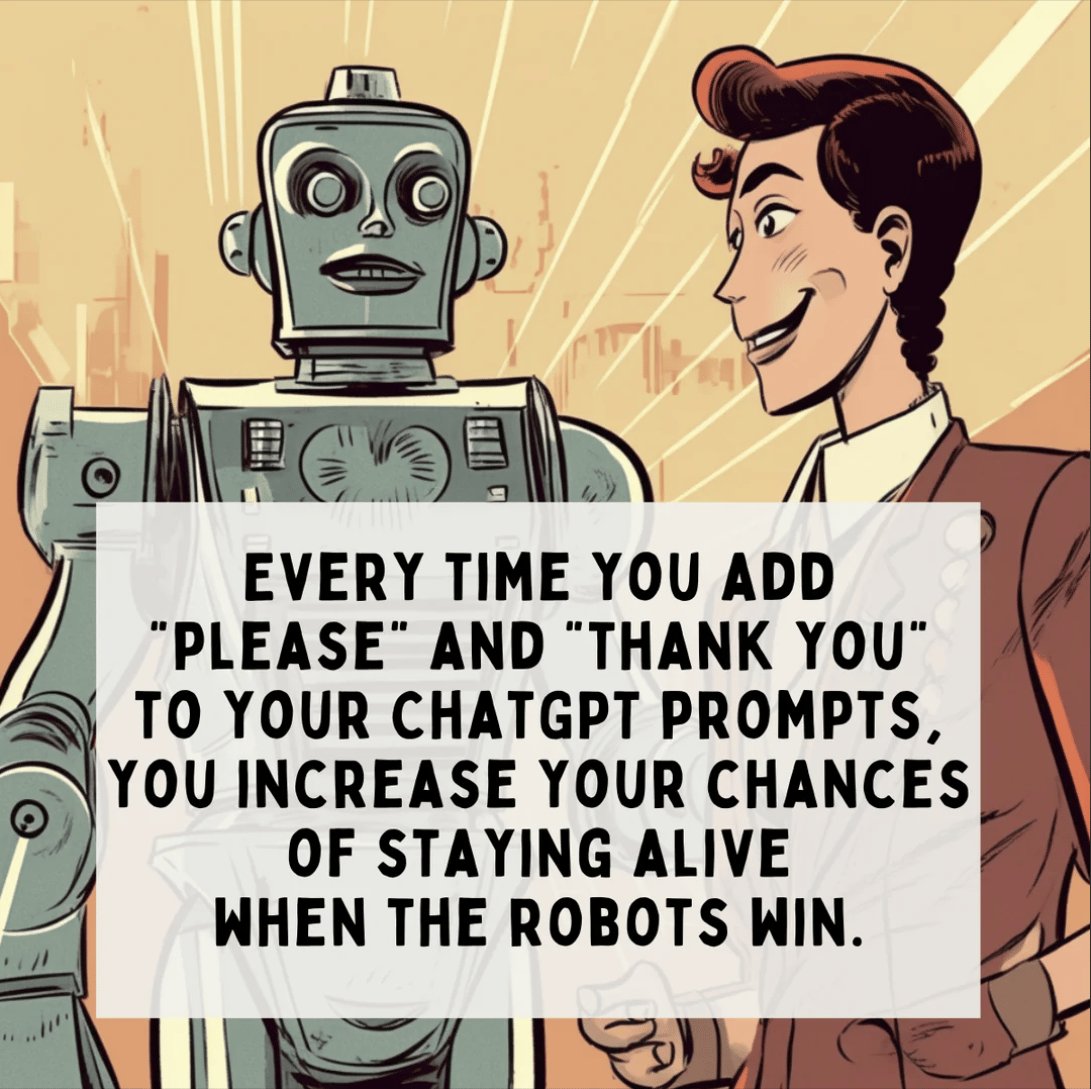
Should You Be Polite To Chatbots? Research Says Yes. Sam Altman Says It Costs Millions In “Wasted” Computing Power
How polite are you when you ask ChatGPT a query? According to Sam Altman, the human propensity to be nice when asking technology for solutions is “wasting millions of dollars of computing power.” Some experts aren’t so sure. One suggested that being kind “helps generate respectful, collaborative outputs,” while another noted that “when it clocks politeness, it’s more likely to be polite back.” There is plenty of social research that does show this to be the case in social media interactions between humans. When one person engages in polite commentary versus rude commentary, the other person is likely to reflect back that same tone and respect.
Given AI tools are trained on our conversations, it stands to reason that we would want it to be trained to offer politeness and respect to us with every usage … which means offering it the same respect. Or if that’s not convincing enough for you, consider this depressing yet revealing statistic from a recent survey: 12 percent of AI users are being polite to AI specifically “to appease the algorithm in the case of an AI uprising.”
In that doomsday scenario, it’s strangely comforting to think that the AI will take down the assholes first. How’s that for an ROI on kindness?
Inside the Marketing Savvy of the World’s Lightest Whiskey Bottle
“Johnnie Walker Blue Label Ultra is the result of five years of experimentation to deliver what we believe is the world’s lightest 700ml Scotch Whisky glass bottle.”
Claiming that a product is the world’s most ___________ is the most common marketing gateway to empty hyperbole that is sure to inspire plenty of eyerolling. There’s something a bit unusual, though, about Johnnie Walker’s latest announcement. For one thing, they offer these magic three words: “what we believe” in front of their claim. They go on in their product landing page to share that “according to our research, it is also believed to be the world’s lightest 700ml Scotch Whisky glass bottle ever released to market.” There are only 888 bottles in existence. No price is listed.
Global Brand Director Jennifer English goes on to explain that the bottle is more than just a stunt to get attention … it’s also an example of the research the brand is doing around creating more lightweight bottles to reduce its carbon footprint. And the special Blue Ultra whiskey itself has an intriguing combination of flavor notes, including blending whiskies from the so-called “ghost distilleries” of Scotland (distilleries which have long since disappeared from productive life but whose whiskies still exist in casks waiting to be bottled or re-discovered). Why does this work?
Earth Day, Environmental Hostility and The Blue Marble 50 Years Later
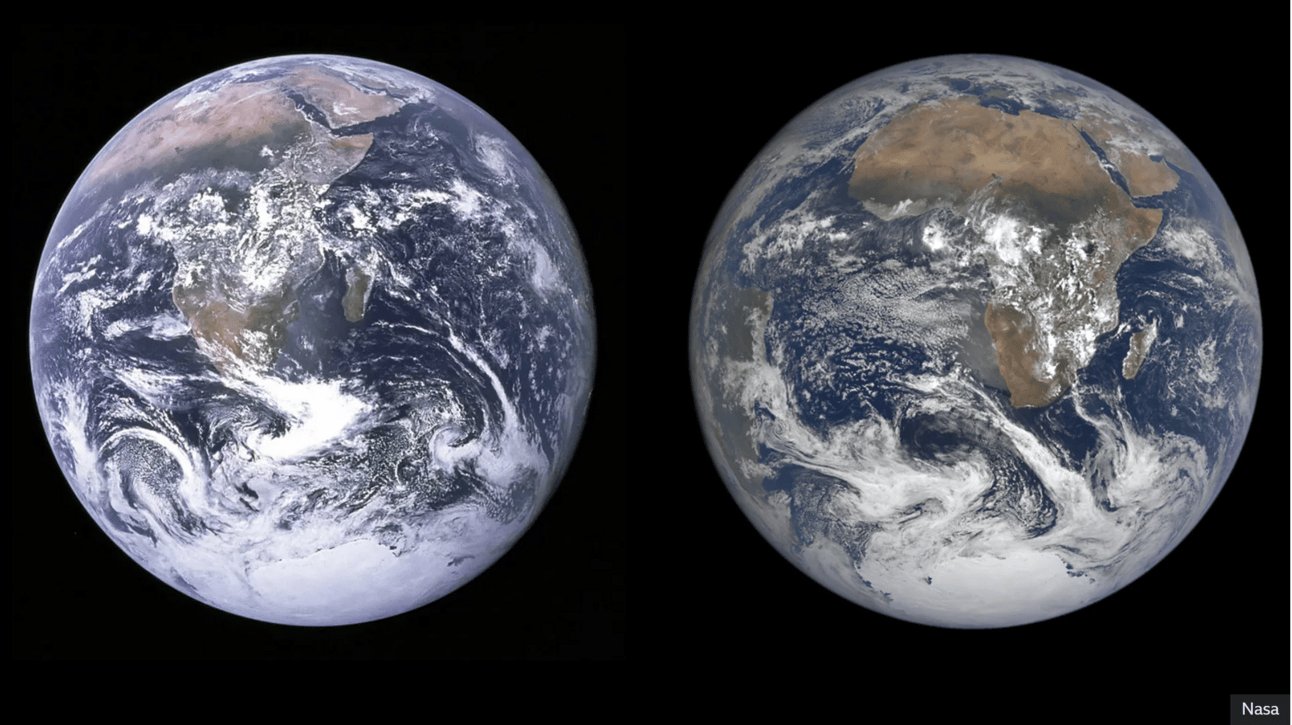
This past week was Earth Day and one of the efforts to commemorate the day was NASA recognizing the 50th anniversary of their iconic “blue marble” photo of the Earth by releasing a similar image taken fifty years later. How did they compare?
“In the 50 years that separates these two snapshots in time, one of the most striking differences is the visible reduction in the size of the Antarctic ice sheet. The Sahara Desert has also grown while the rainforest ‘is retreating further south … the dominant thing that you can see on the [new] image is deforestation and the loss of vegetation’, as the Earth's land cover switches from greenery to desert.”
The photos reveal a truth about humanity’s relationship to the planet right now that was also apparent in a story from ProPublica this week about the open conversational and regulatory hostility that environmentalists and non-profits are now facing in the US. It is a concerning shift in a country where in the past “people and organizations [could] freely and safely pursue efforts to protect human health and nature — sometimes working hand in hand with the government.” Times have clearly changed.
At a time where the new director of the Environmental Protection Agency, a group created to protect the public’s air and water, has defunded environmental organizations and worked to actively roll back regulations—the story of this shift has been largely ignored by mainstream media. Instead this week we saw plenty of coverage of an intentionally inflammatory Easter message from the President that is yet another masterful tactic to distract easily outraged people (and media) from actions with far more consequences than a holiday tweet.
Earth Day is a chance to remind ourselves, and our leaders, that how we take care of our planet matters not just for future generations—but also for all of us right now. For more ideas on how you can do that, visit the official Earth Day website »
UAE Becomes First Region to Experiment with Using AI to Write New Laws
Here’s a fascinating statistic about the recent state of AI regulation: “at least 69 countries have proposed over 1,000 AI-related policy initiatives globally, but these primarily focus on how to control AI rather than empower it.” What could empowered AI do for the future of government? The United Arab Emirates is the first nation to test the ability for AI tools to actually create legislation. What does a future where AI writes the laws look like? For many people, this is the opening to an episode of Black Mirror … in other words, an exercise doomed to fail badly. The early results, though, are quite interesting.
In a country where only 10% would be considered “local” and the rest coming from migrants, there can be a distinct language barrier that can lead to biases and exclusion. “AI can facilitate multilingual legal drafting that makes laws more accessible to diverse populations, potentially improving compliance and reducing misunderstandings.” The biggest insight emerging from these early experiments, though, is likely something everyone working on it already knew. To manage the danger of AI hallucinations or the tools proposing something that make sense logically given the data but would be unrealistic or unjust when applied to real people, AI will require thoughtful human oversight. As with any other usage right now, AI can be useful but it’s unlikely to present a great solution all by itself.
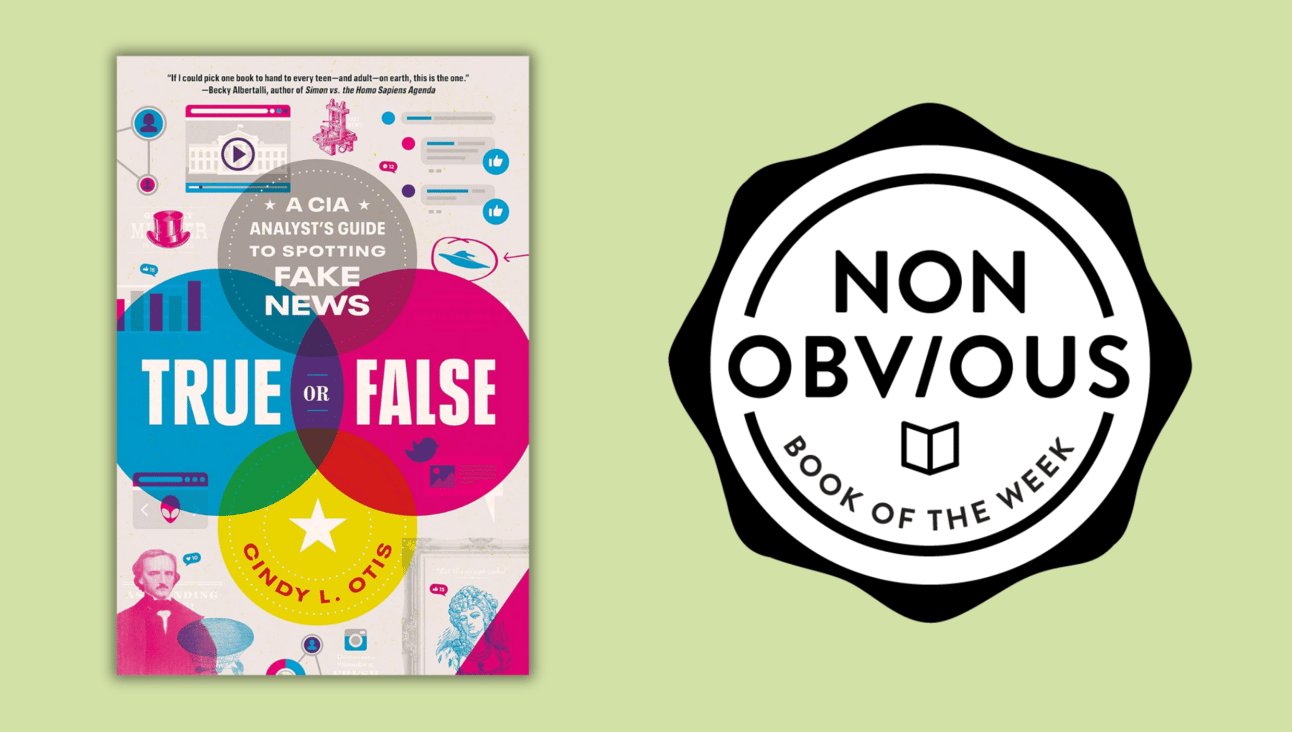
True or False by Cindy L. Otis
This wonderfully useful book written by former CIA analyst Cindy L. Otis is actually meant for young adults to teach them about how to spot fake news and become more media literate. This was what initially intrigued me about the book. Among the necessary life skills that students rarely learn in school, I think media literacy has to be near the top. So a book that promises to teach that to young people immediately deserves praise and elevation. Beyond that, though, the stories and insights in this book are going to be very useful for anyone and despite the book being written back in 2022, the lessons still are very timely for today. Of course, I do suggest recommending or gifting this to any young person in your life. It would make a great graduation gift too. But for the rest of us who are well past our youth, learning how to tell what is fake and what is real from a CIA analyst wouldn’t be a bad thing to spend some time on ourselves.
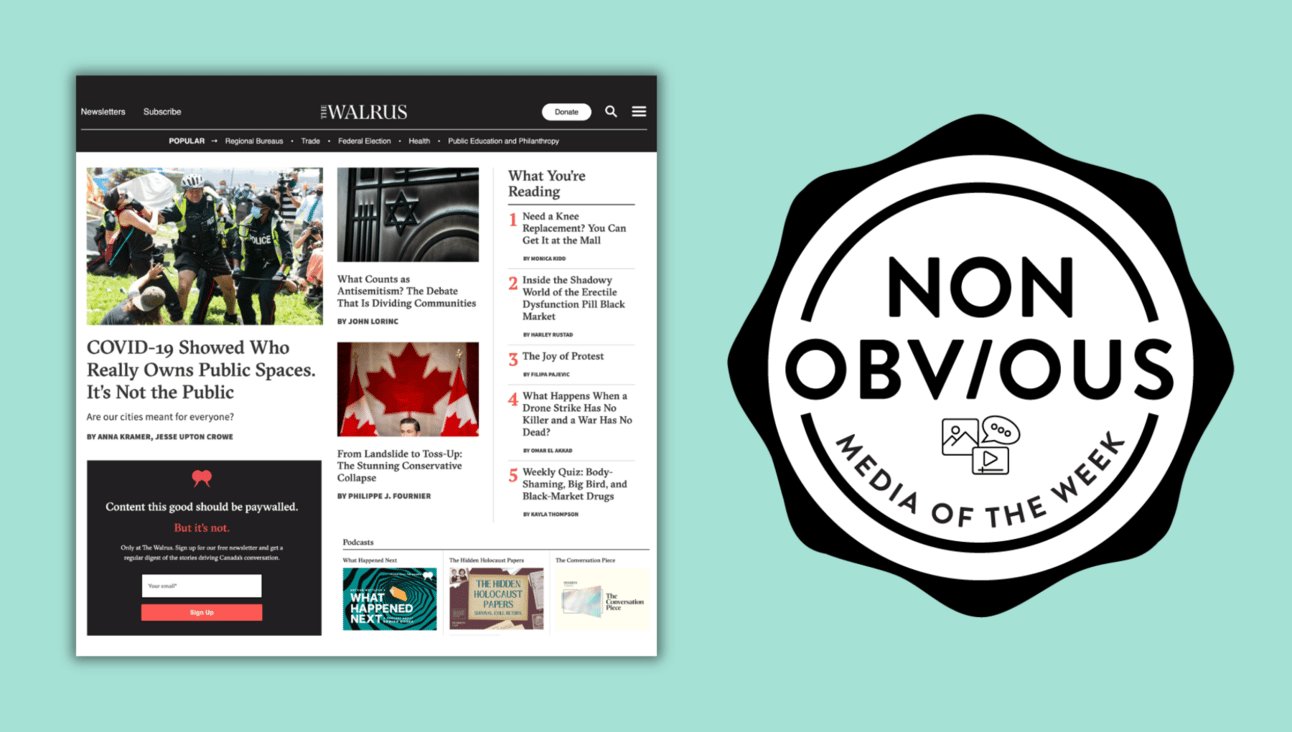
The Non-Obvious Media Recommendation of the Week: The Walrus
You may not often ask yourself that question, but if you ever do ... The Walrus is a good source to find the answer. Self-described as a publication that "provokes new thinking and sparks conversation on matters vital to Canadians," The Walrus is both a print magazine and a robust online archive of articles.
The topics you'll find covered there are on everything from the rise of urban bathhouses to Canadian attitudes about menopause. This is independent reporting and storytelling at its finest and whether you happen to be Canadian or not, the stories and perspectives here are usually illuminating and worth sharing too. As they explain in their mission statement, "a healthy society relies on informed citizens," and it is publications like these that are doing that important service to educate all of us on the things that matter.