What’s In This Issue?
 Story 01The Library of Lost & Imaginary BooksStory 02DEI May Be Dying … But Here’s What Could Replace It
 Story 03The No Book: An Inside Look At Tim Ferriss’s New Book (and How He Protects His Time)
 Story 04The Long History of the Future by Nicole Kobie
Media Recommendation
 Dubai Future Foundation
The Library of Lost & Imaginary Books
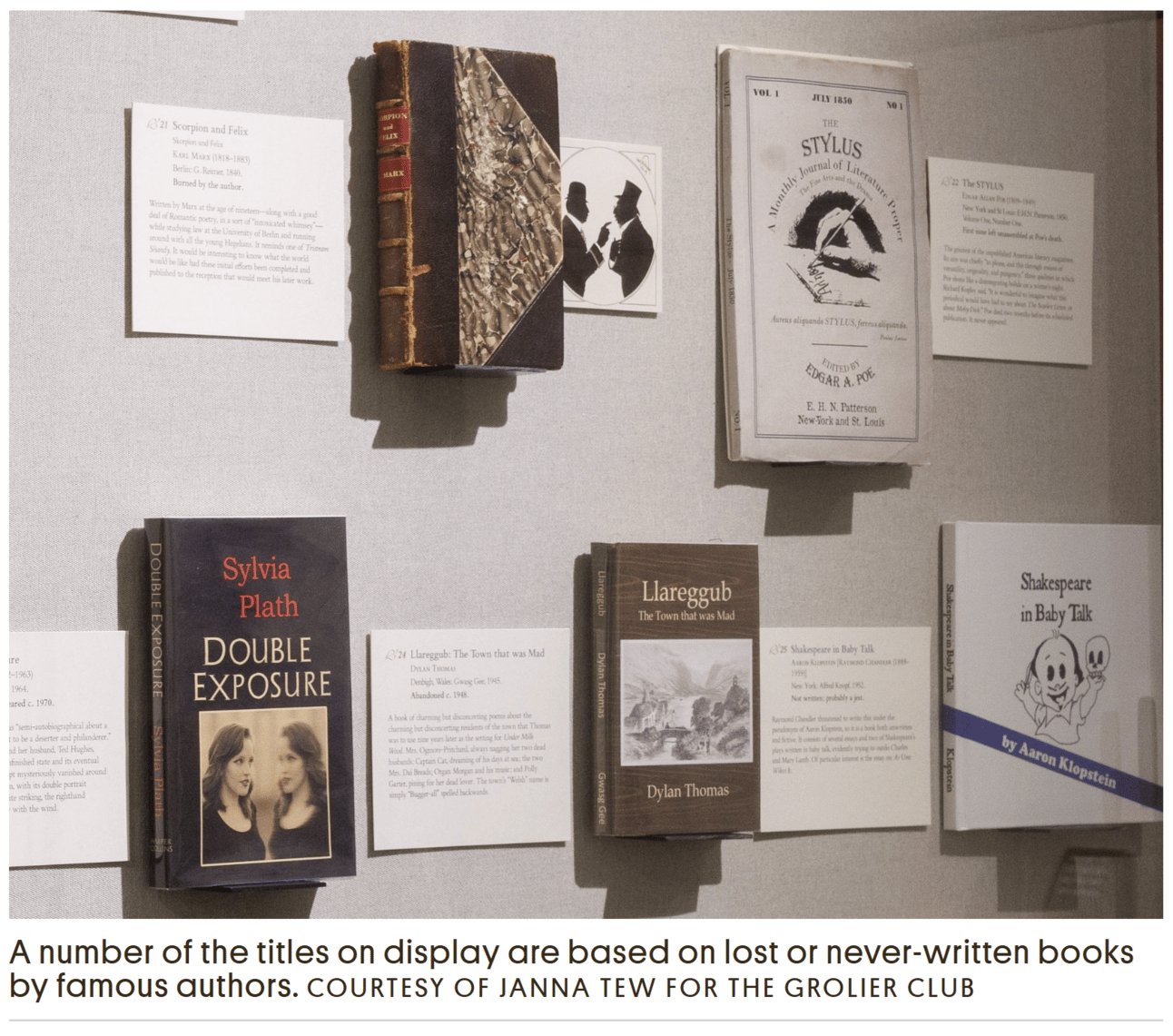
There are books mentioned within the pages of other books that never existed on their own, but what if they did? That’s the fascinating story visitors can explore at the Center for Book Arts in Manhattan where you can either show up with your own idea for a book or help recreate an imagined title from another book. The bookbinding equipment at the Center is traditional and the experience is physical and nostalgic—though probably most of the people visiting were not born when books were first made this way. The founder Reid Byers describes the delight of the experience he has created this way:
Making physical versions of pretend books, many made with perfectly chosen and sometimes startlingly convincing details, heightens that desire: you can look, but you can’t read. For the most part, the pages of the books are blank.
There is an exhibition of these imaginary books on right now at the Grolier Club through February 15th if you happen to be in New York. If not, the experience can be viewed online too.
DEI May Be Dying … But Here’s What Could Replace It
When Jennifer Brown and I first published our book Beyond Diversity in 2021 it was moment of big momentum for DEI. Amongst the many other books published at that time, there was an underlying sentiment of “blaming and shaming” people that we tried our best to reject. You don’t change minds, we felt, by alienating people before you even have a chance to start a conversation. This week, longtime DEI practitioner Lily Zheng shared a similar perspective in their timely criticism of the typical DEI model:
“Decades of research shows clear problems with status-quo DEI. Despite their widespread prescription, DEI trainings often fail to change bias or reduce prejudice. Popular strategies for communicating the value of DEI can paradoxically both hurt marginalized communities and decrease leadership support for DEI. Common initiatives intended to create better workplaces for all might instead activate backlash, increase burnout, and fail to improve outcomes for underserved groups.”
Zheng goes on to ask what comes after DEI and proposes a different model based on a framework of fairness first. She suggests that “focusing on representation as an issue of trust rather than an issue of identity allows us to avoid zero-sum conversations that can come from fixating on demographics.” In a time when there is widespread panic about the newest rollback of DEI initiatives both within the US government and in businesses across sectors, there are also underappreciated signs that DEI may not actually be dead … just changing. For example, President Trump’s cabinet may be slightly more diverse than people realize—probably because he prioritizes loyalty above all else.
Still, the only way to “save” DEI and guarantee all people have similar access to opportunities and ensure we are not saddled with a one-dimensional government or narrow minded leadership in companies is to try a new model. Zheng uses the acronym FAIR to describe one such model. There may be others too. What’s clear is that the old way of practicing and talking about DEI is under attack and won’t survive in the same form it once was.
The No Book: An Inside Look At Tim Ferriss’s New Book (and How He Protects His Time)
In case you’re not familiar with author Tim Ferriss, here’s a crazy fact about him: If he’s in a time when he isn’t checking email (usually for three weeks at a time), he deletes all the emails he has received and asks people to resend them if they are really that important. Tim’s first book The Four Hour Workweek was a global bestseller. In this new book (his first in over seven years), which he is releasing as a serial with two chapters at a time, Tim writes about all the techniques and scripts he uses to protect his time—and how you can do the same.
While his perspective is probably more extreme than most of us might be willing to do, the premise of the book (explored over what he estimates as more than 500 pages) is an important reminder that we could all benefit from saying no to more things. Maybe the only way to actually do it is by learning from someone like Tim who is legendarily good at it from practicing it all the time.
The Long History of the Future by Nicole Kobie
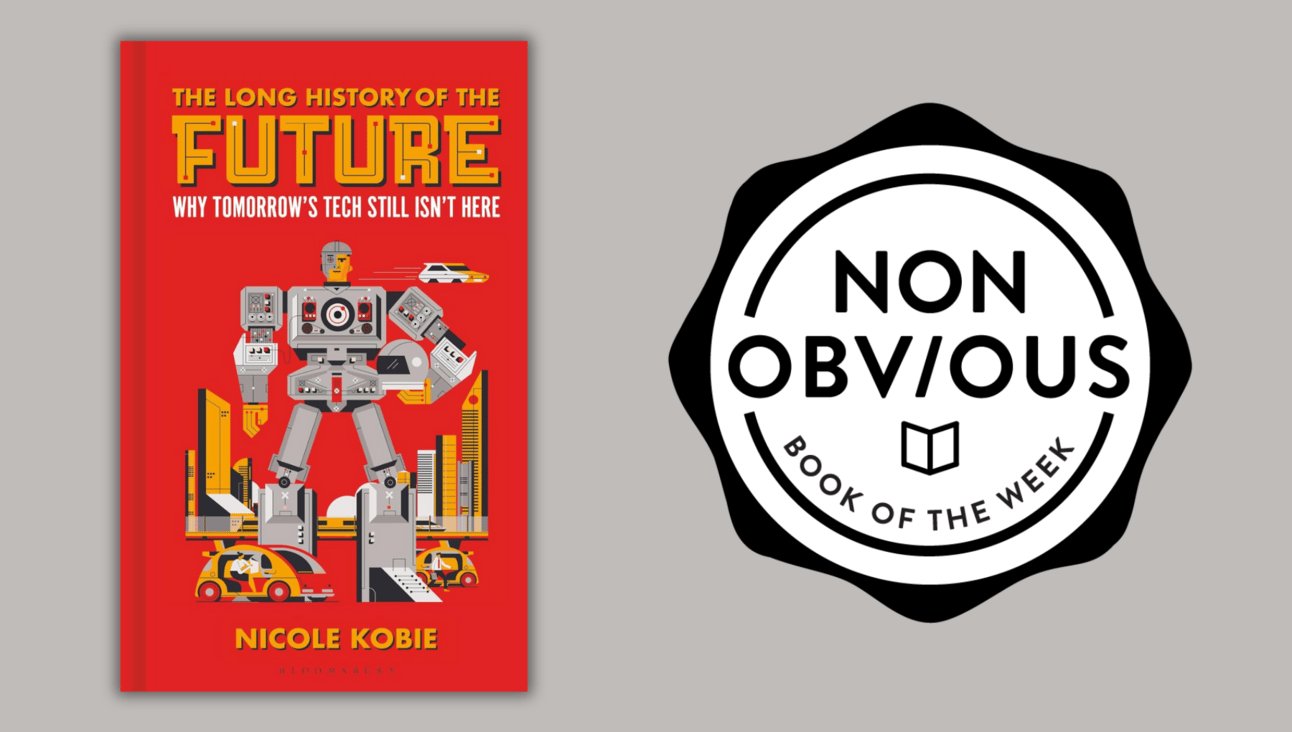
Wide eyed predictions of the future are fun to read, and even more fun to write. Yet for every book that promises to predict the future, there remains a nagging problem at the heart of those predictions: that future, which should already be here continually seems far off. Why isn’t tomorrow’s technology already here? That is the tantalizing question Nichole Kobe aims to answer in this book. Through a series of chapters tackling the most common future technology predictions, from driverless cars to Smart cities, Kobe explains exactly why the actual building of these technologies isn’t as simple as those visionary predictions might suggest. Yet rather than using this, as an excuse for stagnation, she paints a portrait of what tomorrow’s society may actually look like when we implement a version of these technologies that remotely represents a different slice of what we are actually shown.
The Non-Obvious Media Recommendation of the Week: Dubai Future Foundation
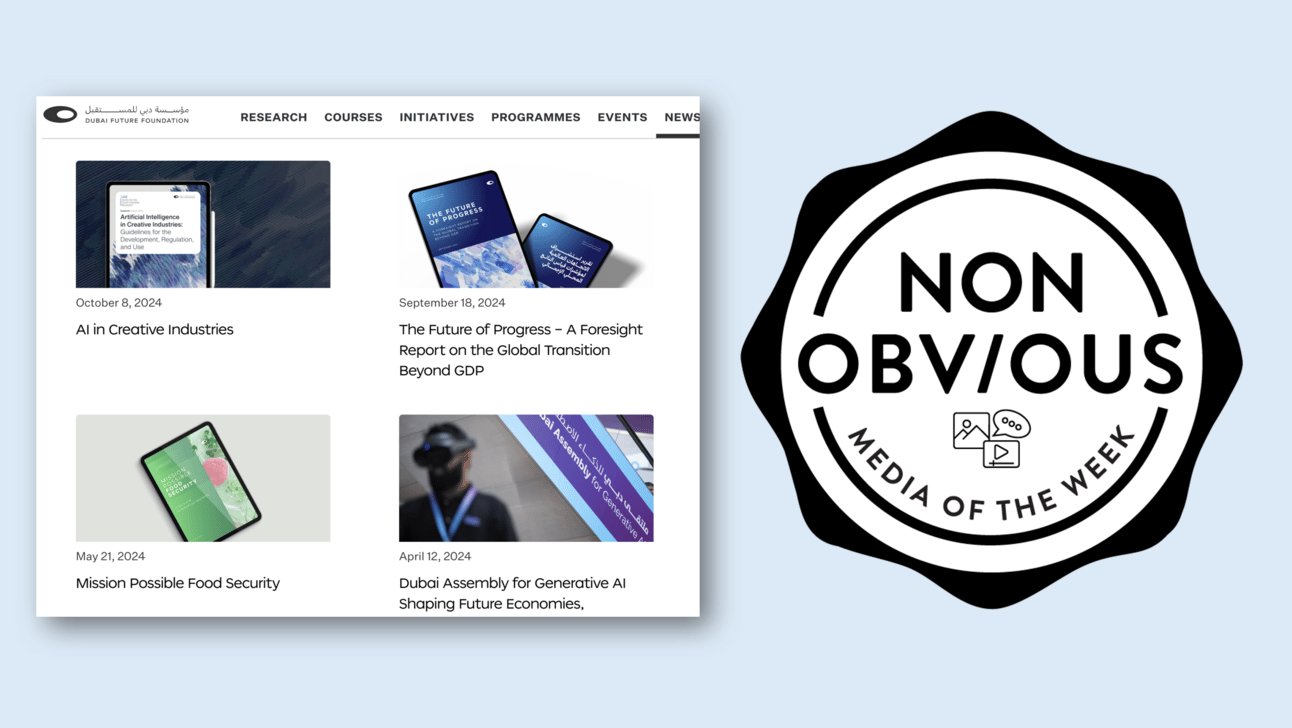
One of the most forward looking nations invests heavily in future planning, and much of their planning, research, insights and project efforts are all published freely online. This is the wealth of futures information you’ll find on this government sponsored website from the Dubai Future Foundation. These insights along with the publications and research published by the UAE Government Development & Futures Office are just as useful as many trend insights websites that require subscriptions and payment in order to access. On these sites, you can download PDFs and take a look at some ongoing projects that are already underway across the seven Emirates in partnership with many other third party groups.